
Service dogs play a crucial role in society by providing assistance and support to individuals with disabilities and mental health conditions. These highly trained animals are capable of performing a wide range of tasks that can greatly improve the lives of their owners. From helping with physical disabilities and mobility issues to providing emotional support and companionship, service dogs have the power to enhance the quality of life for those in need.
For individuals with physical disabilities and mobility issues, service dogs can be a lifeline. These remarkable animals are trained to perform a variety of tasks that can greatly increase independence and mobility for their owners. For example, service dogs can retrieve items, open doors, turn on lights, and even assist with balance and stability. These tasks not only make daily activities more manageable but also provide a sense of empowerment and freedom for individuals who may otherwise struggle with basic tasks.
How a Service Dog Can Help with Physical Disabilities and Mobility Issues
Service dogs are trained to perform a wide range of tasks that can greatly assist individuals with physical disabilities and mobility issues. For example, they can help with retrieving items, opening doors, turning on lights, and even assisting with balance and stability. These tasks not only make daily activities more manageable but also provide a sense of empowerment and freedom for individuals who may otherwise struggle with basic tasks.
One example of how service dogs can help with physical disabilities is by providing assistance to individuals who use wheelchairs or other mobility aids. These dogs can be trained to pull wheelchairs, retrieve dropped items, and even open doors or cabinets. This level of independence allows individuals to navigate their environment more easily and reduces their reliance on others for assistance.
In addition to physical tasks, service dogs also provide emotional support and companionship to their owners. This is especially important for individuals who may feel isolated or lonely due to their disability or mobility issues. The presence of a service dog can provide comfort and companionship, helping to alleviate feelings of loneliness and improve overall well-being.
The Emotional Support and Companionship Provided by a Service Dog
One of the most significant benefits of having a service dog is the emotional support and companionship they provide. These animals are trained to be attentive and responsive to their owner’s needs, offering comfort and companionship in times of distress or anxiety.
For individuals with mental health conditions such as anxiety or depression, service dogs can be a source of comfort and stability. These animals are trained to recognize signs of distress and provide grounding techniques to help their owners manage their symptoms. For example, a service dog may be trained to perform deep pressure therapy by applying gentle pressure to their owner’s body during moments of anxiety or panic. This can help regulate breathing and reduce feelings of anxiety or stress.
Personal stories from individuals who have experienced emotional support from their service dogs further highlight the importance of these animals in improving mental well-being. Many individuals report feeling a sense of calm and security when their service dog is present, knowing that they have a constant companion who understands and supports them unconditionally.
Breaking Down Social Barriers: The Socialization Benefits of Having a Service Dog
In addition to providing physical assistance and emotional support, service dogs also play a crucial role in breaking down social barriers for individuals with disabilities. These animals can help their owners interact with others in public settings, fostering socialization and inclusion.
For individuals with disabilities, social interactions can often be challenging due to physical limitations or societal stigmas. However, the presence of a service dog can help bridge this gap by acting as an icebreaker and conversation starter. People are often more inclined to approach someone with a service dog, leading to increased social interactions and opportunities for connection.
Service dogs also serve as a visible symbol of disability, raising awareness and promoting understanding in the community. By seeing a service dog in action, people may become more educated about the various types of disabilities and the capabilities of individuals with disabilities. This increased awareness can help break down stereotypes and promote inclusivity.
How Service Dogs Can Help with Anxiety, Depression, and PTSD
Service dogs have been shown to provide significant emotional support for individuals with mental health conditions such as anxiety, depression, and post-traumatic stress disorder (PTSD). These animals are trained to recognize signs of distress and provide comfort and grounding techniques to help their owners manage their symptoms.
For individuals with anxiety, service dogs can provide a sense of security and calmness. These animals are trained to recognize signs of anxiety and can intervene by providing deep pressure therapy or performing other calming tasks. The presence of a service dog can also help individuals feel more confident in social situations, reducing feelings of anxiety or panic.
Similarly, service dogs can provide emotional support for individuals with depression. These animals offer companionship and unconditional love, which can help alleviate feelings of loneliness and sadness. The daily routine and responsibility of caring for a service dog can also provide structure and purpose, which is beneficial for individuals struggling with depression.
Individuals with PTSD can also benefit greatly from the presence of a service dog. These animals are trained to recognize signs of distress and provide grounding techniques to help their owners manage their symptoms. For example, a service dog may be trained to perform tasks such as turning on lights or checking rooms for potential threats, providing a sense of safety and security.
The Importance of Training and Bonding with Your Service Dog
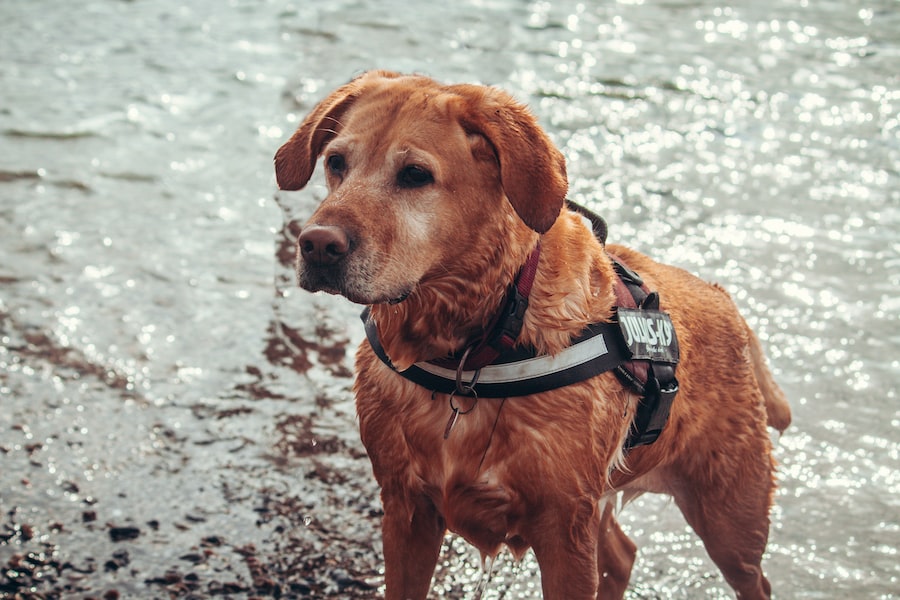
The training process for service dogs is extensive and requires a significant investment of time and resources. These animals undergo rigorous training to ensure they are capable of performing the necessary tasks and providing the required support to their owners.
Training typically begins when the dog is still a puppy, as early socialization is crucial for their development. They are exposed to various environments, people, and situations to ensure they are comfortable and adaptable in different settings. As they grow older, they receive specialized training to perform specific tasks based on the needs of their future owners.
In addition to training, bonding with your service dog is essential for optimal results. Building a strong bond with your service dog helps establish trust and communication, which is crucial for effective teamwork. This bond is developed through consistent training, positive reinforcement, and spending quality time together.
The Legal Rights and Protections Afforded to Service Dog Owners
Service dog owners are afforded legal rights and protections to ensure they can access public spaces and receive the necessary support and accommodations. These rights are outlined in the Americans with Disabilities Act (ADA) and vary depending on the country or region.
In the United States, the ADA defines a service animal as a dog that is individually trained to perform tasks for the benefit of an individual with a disability. Under the ADA, service dogs are allowed access to all public areas, including restaurants, stores, and public transportation. They are also exempt from pet-related fees or restrictions in housing.
It is important to note that emotional support animals or therapy animals do not have the same legal protections as service dogs. Emotional support animals provide comfort and companionship but are not trained to perform specific tasks for individuals with disabilities. Therapy animals, on the other hand, are trained to provide comfort and support to others but are not considered service animals under the ADA.
The Financial and Practical Considerations of Owning a Service Dog
Owning a service dog comes with financial and practical considerations that potential owners should be aware of. The cost of acquiring and maintaining a service dog can be significant, as it includes expenses such as training, veterinary care, food, grooming, and equipment.
The cost of acquiring a fully trained service dog from a reputable organization can range from several thousand dollars to tens of thousands of dollars. This cost reflects the extensive training and care that goes into preparing a service dog for their role. However, there are also options for individuals who wish to train their own service dog, which can be more cost-effective but requires a significant investment of time and effort.
In addition to financial considerations, owning a service dog also requires practical adjustments to daily life. Service dogs require regular exercise, mental stimulation, and care. They also need to accompany their owners wherever they go, which may require additional planning and accommodations.
The Impact of Service Dogs on Family and Community Relationships
Service dogs not only have a profound impact on the lives of their owners but also on their families and communities. These animals can bring people together, foster empathy and understanding, and create a sense of community.
In families with a service dog, the animal often becomes an integral part of the family unit. They provide companionship and support not only to their owner but to other family members as well. The presence of a service dog can also help siblings or children better understand and empathize with their disabled family member.
In the community, service dogs act as ambassadors for individuals with disabilities. Their presence raises awareness and promotes inclusivity by challenging stereotypes and breaking down barriers. People are often more inclined to approach someone with a service dog, leading to increased social interactions and opportunities for connection.
The Life-Changing Benefits of Having a Service Dog for Those in Need
Service dogs have the power to enhance the quality of life for individuals with disabilities and mental health conditions. These remarkable animals provide physical assistance, emotional support, and companionship that can greatly improve overall well-being.
From helping with physical disabilities and mobility issues to providing emotional support for anxiety, depression, and PTSD, service dogs play a crucial role in enhancing the lives of those in need. They break down social barriers, foster socialization and inclusion, and promote understanding in the community.
For individuals in need, considering a service dog can be a life-changing decision. The benefits of having a service dog are vast and can greatly improve independence, well-being, and overall quality of life. With the proper training, bonding, and support, service dogs have the power to transform lives and provide a constant source of comfort and companionship.
If you’re interested in learning more about service dogs and the important role they play in people’s lives, check out this informative article on Mighty Dog Breeds: https://mightydogbreeds.com/services/. It provides valuable insights into the various services that these incredible dogs can provide, from assisting individuals with disabilities to supporting those with mental health conditions. Discover how service dogs are trained and the benefits they bring to their owners. Don’t miss out on this fascinating read!
FAQs
What is a service dog?
A service dog is a specially trained dog that assists people with disabilities in performing daily tasks and activities. These dogs are trained to provide assistance to individuals with physical, sensory, psychiatric, or intellectual disabilities.
What tasks can a service dog perform?
Service dogs can perform a wide range of tasks, depending on the needs of their handler. Some common tasks include guiding individuals who are blind or visually impaired, alerting individuals who are deaf or hard of hearing, providing stability and balance for individuals with mobility impairments, and alerting individuals with medical conditions such as seizures or diabetes.
How are service dogs trained?
Service dogs undergo extensive training to learn the specific tasks they will perform for their handler. They are typically trained by professional trainers or organizations that specialize in service dog training. The training process can take several months to several years, depending on the complexity of the tasks the dog will perform.
What breeds of dogs are commonly used as service dogs?
There are many breeds of dogs that can be trained as service dogs, but some of the most common breeds include Labrador Retrievers, Golden Retrievers, German Shepherds, and Standard Poodles. These breeds are known for their intelligence, trainability, and temperament.
Can any dog be a service dog?
No, not all dogs are suitable for service dog work. Service dogs must have a specific temperament and be able to perform the tasks required by their handler. They must also be well-behaved in public and able to ignore distractions. Additionally, some breeds may be better suited for certain types of service work than others.
What is the difference between a service dog and an emotional support animal?
A service dog is trained to perform specific tasks to assist an individual with a disability, while an emotional support animal provides comfort and emotional support to an individual with a mental health condition. Service dogs are allowed to accompany their handlers in public places, while emotional support animals are not granted the same legal protections.