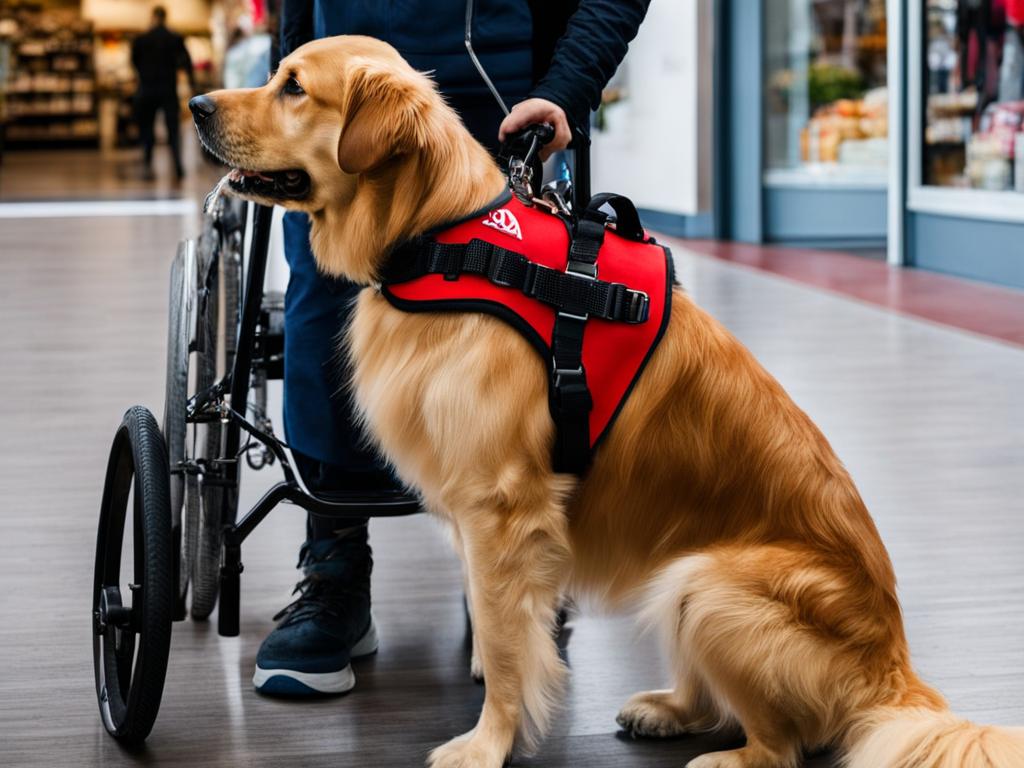
You’ve seen them in airports, grocery stores, and cafes, wearing their little vests and walking with purpose. But just what definition does the term ‘service dog’ carry? According to the Americans with Disabilities Act (ADA), a service dog is far more than your average furry friend. They are highly-trained, ADA compliant service animals with skills tailored to support individuals with disabilities. Whereas anyone can throw a vest on a pooch, distinguishing service dogs from a sea of pets requires a keen eye, as these canine companions are in a league of their own.
Indeed, we’re not just talking about an impressive parlor trick repertoire here. Service dogs perform essential tasks that make day-to-day life not only easier but possible for their handlers. Yet, challenges arise in identifying these diligent dogs amongst a slew of faux paws taking advantage of the system. So buckle up, it’s time to unwrap the mystery and separate the true guardians from the impostors.
Key Takeaways
- Understand the service dog definition as per the ADA law.
- Learn how ADA compliant service animals differ from other animals.
- Recognize the importance of distinguishing service dogs from pets.
- Acknowledge the significance of their role in aiding individuals with disabilities.
- Be aware of the laws and rights that protect service dogs’ access to public spaces.
- Discover the impact of false representation and why it’s essential to combat it.
The Role and Rights of Service Dogs Under the ADA
Understanding the vital role service dogs play in the lives of their handlers starts by digging into the solid foundation they stand on – the Americans with Disabilities Act (ADA). The ADA sets forth concrete ADA service dog criteria, which fiercely guards the rights of service animals and consequently, the freedoms of their human counterparts. Knowing these specifics is akin to holding a master key; it unlocks the right for these service dogs to accompany their handlers almost anywhere and everywhere.
The Americans with Disabilities Act (ADA) Definition of Service Dogs
By ADA standards, a service dog isn’t your everyday Fido. This is a dog that’s been individually trained to perform tasks directly related to a person’s disability. Whether they’re guiding the visually impaired or alerting those with hearing impairments, these dogs are more than companions; they’re essential aides that enable their handlers to navigate everyday life.
The Two Central Questions Enabling ADA Compliance
Fancy some trivia to whip out at your next party? Here are the only two questions permitted by the ADA to establish a service dog’s legitimacy: “Is the dog required because of a disability?” and “What work or task has the dog been trained to perform?” Remember, curiosity didn’t just kill the cat; it can also violate ADA rules, so probing into the nature of someone’s disability or demanding a service dog’s training documentation is a major no-no.
Laws Protecting Service Dog Access to Public Spaces
When it comes to public access for service dogs, the ADA doesn’t merely suggest; it insists that service animals are granted passage to nearly all public domains, emphatically stating that the presence of a service dog must never equate to discrimination against individuals with disabilities. From patient rooms in hospitals to the hustle and bustle of city buses, these canines have a VIP pass to virtually all spaces where the public can tread.
Identifying Legitimate Service Dog Teams
So, you’re wondering how to spot the superstars of the canine world, also known as legitimate service dogs. It’s all about the poise, the determination, and the exquisite service dog training they receive. Unlike their pet counterparts, these dogs are the epitome of professionalism and behavior. Let’s dive a little deeper, shall we?
The Training and Behavior Expectations of Service Dogs
When it comes to identifying legitimate service dogs, think of them as the James Bonds of the dog universe – cool under pressure and always ready for action. Their training is top-notch, kind of like doggy Harvard.
- A certified service dog will sit by their handler’s side, steadfastly indifferent to the tantalizing slice of pepperoni pizza you dropped.
- You won’t hear them bark for a frivolous reason – they’re all about the mission.
- A legitimate service dog’s behavior is impeccable; they’re the ones not hustling for your hot dog at a picnic.
- They’re to their handlers what a scalpel is to a surgeon – an essential tool, finely tuned and always in control.
And let’s not forget the years of rigorous training they undergo. They’re the valedictorians of their class, and they have the skills to prove it.
Understanding the Difference Between Service Dogs and Pets
Now, distinguishing service animals from pets is like telling the difference between a gourmet burger and a fast-food one – it’s all in the details. While pets may offer love and affection, service dogs are on another level altogether. They’ve been shaped into precise assistants, capable of responding to seizures or guiding with more precision than your latest smartphone.
- A service dog seamlessly navigates the world of humans, undeterred by the chaos of a crowded street or the clatter of a falling dish.
- They behave more like a seasoned employee than a furry friend when they’re on the job–no scampering after squirrels.
- In comparison, your regular pet might be planning its next great escape or plotting the conquest of the living room couch.
These trained professionals stand out because they don’t – no theatrics, no fuss, just quiet dedication.
Remember folks, when it comes to service dog training and identification, it’s about picking up on cues that scream “I’m working here!” These dogs don’t just walk the walk – they’re the essence of canine nobility. So the next time you see a service dog, appreciate the unsung hero that doesn’t bark for a round of applause.
Confronting the Issue of Fraudulent Service Dogs
Imagine this: You walk into a café and spot a dog clad in a service vest, but instead of acting calm and collected, it’s causing mayhem – knocking over chairs and giving the customers an unwanted shower of doggy drool. You guessed it – another case of a fraudulent service dog. But why is the fake service dog problem more than just a nuisance? It’s slapping the face of ADA regulations. That’s right, some individuals are blatantly abusing service animal laws, bringing their untrained pets into public spaces unduly.
Let’s weave through the marketplace of deception together. Fraudsters easily nab fake service dog paraphernalia faster than a con artist can say “scam”. We’re talking vests, tags, and those oh-so-official-looking certificates. It would be almost impressive if it wasn’t so ethically bankrupt. Needless to say, there isn’t a national registry waving a red flag at these impostors, which only oils the gears of their deceitful machine.
But don’t fret. Much like a smart cookie can spot a Rolex knock-off, these fraudulent service dogs often give themselves away. How, you ask? It’s all in the behavior: a genuine service dog wouldn’t dare do the cha-cha in a quiet library, nor would it engage in an impromptu taste test of a stranger’s shoelaces. They’re trained to perform tasks; acting like a four-legged-lunatic isn’t one of them.
Legally speaking, faking a disability and parading your pooch as a service animal is kind of like stealing a handicapped parking spot – it’s not just frowned upon; it can lead to a waltz into the courtroom. Take California, for example – they call it a misdemeanor. That’s legalese for “You’re in deep trouble, buddy”.
Remember, when you pretend Fido is a service dog, you’re not just ruffling feathers; you’re undermining the very laws designed to support individuals with genuine needs.
- Buying fake service dog vest online? That’s a no-go.
- Service dog misbehaving in public? Red flag!
- Abusing ADA policies? Oh, you better believe that’s a paddlin’.
So, what can you do? Stay sharp, and keep an eye out for the real McCoys. They are well-behaved, unassuming, and absolutely invaluable to their humans. And if you ever find yourself questioning the legitimacy of a service dog, remember – it’s not about the accessories; it’s all about the actions.
What is a Service Dog
Imagine you’re out and about, and you spot a dog decked out in a vest, walking alongside its handler in a surprisingly orderly fashion. That’s not just any dog; it’s a service dog—a dedicated, well-trained companion capable of performing a remarkable variety of tasks for individuals with disabilities. Wondering what goes into the making of such reliable service dogs? Let’s dive into the rigorous training process these extraordinary animals undergo and the vast array of assistance they provide.
Service Dog Training: The Intensive Process Behind a Reliable Assistant
The service dog training process is no walk in the park. From their puppy days to full-fledged service status, these dogs are put through extensive and specialized training tailored to the unique needs of their future handlers. It all starts with painstaking socialization to get comfortable around people and other animals, followed by advanced training that sharpens their innate abilities into specific skills.
Reliable service dogs must immaculately execute commands and perform disability-specific tasks, which can include anything from pulling a wheelchair to alerting someone of a drop in blood sugar. Only the most dedicated and adaptable dogs can ultimately pass this test, ensuring they can serve as a truly dependable assistant to their human partner.
The Diversity of Tasks Performed by Service Dogs
When we talk about the variety of service dog tasks, we’re discussing a spectrum so broad it’s almost hard to fathom. From sensing medical episodes before they happen to providing mobility support, these dogs are tailor-trained to bolster the independence of their handlers.
| Service Dog Skills | Disabilities Served | Examples of Tasks |
|---|---|---|
| Medical Alert | Diabetes, Seizures, Allergens | Alerting to blood sugar levels, predicting seizures, sniffing out allergens |
| Psychiatric Support | PTSD, Anxiety Disorders | Grounding handler during a panic attack, interrupting harmful behaviors |
| Mobility Assistance | Spinal Cord Injuries, Muscular Dystrophy | Retrieving items, opening doors, supporting balance |
| Guiding the Visually Impaired | Blindness, Low Vision | Leading around obstacles, signaling changes in elevation |
With such diverse capabilities, it’s clear why service dogs are more than just pets—they’re lifelines for many. Through steadfast companionship and acute attentiveness to their handler’s condition, they make daily life more navigable. Remember the next time you see a service dog; you’re looking at a pinnacle of training and a paragon of dedication.
Legal Implications of Faking a Service Dog
Let’s get real for a moment. You’ve probably seen an impeccably behaved golden retriever in a vest at your local coffee shop, calmly sitting by its owner. Now imagine someone’s pet poodle parading around in a similar vest, snagging scones off tables—blatantly not a trained service dog. Passing off your pet as a service animal not only demeans the legitimacy of real service dogs but also lands you in hot water legally. It’s time to dive into the serious consequences of fake service dogs and how state laws are taking a bite out of this deceitful practice.
The Ethical and Legal Consequences of Service Dog Fraud
Owning up to our responsibilities includes recognizing the unethical nature of service dog fraud. This act of deception carries weightier ramifications than just side-eye from onlookers—it taints the public’s trust in genuine service dogs that uphold their end of the bargain 24/7. Moreover, the ethical breach segues into legal repercussions, because playing dress-up with your pet can actually lead to service dog misrepresentation penalties.
State-Specific Penalties for Misrepresenting Service Animals
Every state bares its teeth differently when it comes to legislating against service dog fakery. Strap in as we navigate the patchwork of state laws on service animals that ensure owners of fraudulent fur-faces could face fines, community service, or even jail time. Think of these penalties as society’s way of preserving the dignity of those who truly rely on their four-legged helpers for support and independence.
| State | Consequence | Penalty Amount |
|---|---|---|
| California | Misdemeanor Fine | Up to $1,000 |
| Florida | Second-degree Misdemeanor | $500 and/or up to 60 days in jail |
| New Jersey | Fine for First Offense | Up to $250 |
| Washington | Civil Infraction | Up to $500 |
Remember, don’t even flirt with the idea of faking a service dog—it’s a direct insult to those who depend on their loyal companions to navigate life’s challenges. Plus, you wouldn’t want to explain to a tail-wagging jury why you’re guilty of barking up the wrong legal tree, would you?
How Fake Service Dogs Hurt the Rights of Those in Need
Imagine, if you will, a world where every tail wag and furry companion is seen through a lens of doubt. This isn’t a dystopian fiction—it’s the unfortunate reality for many disabled individuals whose legitimate need for a service dog is overshadowed by the growing impact of fake service dogs. If you’ve ever wondered how the misuse of service dog credentials affects society, buckle up because it’s a bumpy ride.
Let’s take it from those whose lives are quite literally guided by their canine companions. The rights of disabled individuals are enshrined in law, ensuring that they can navigate the world with the support they need. But when Fido next door dons a counterfeit service vest, it undermines the validity of genuine service animals, leading to skepticism and undue scrutiny of those who already face everyday hurdles. Here’s the lowdown on the service dog abuse consequences that ripple through communities.
Fraudulent fluffers are more than just a faux pas—they disrupt the delicate balance of trust that defines public spaces as welcoming for everyone, including those with disabilities. It’s a sad day when an individual is challenged or even turned away because their lifeline—their service dog—has been mistaken for a phony in the eyes of a wary shopkeeper.
| Legitimate Service Dog Rights | Impacts of Fake Service Dog Incidents |
|---|---|
| Unrestricted access to public places | Increased scrutiny and potential denial of entry |
| Protected privacy regarding disability | Higher likelihood of invasive questions and suspicion |
| Recognition of the dog’s essential role | Diluted public understanding and appreciation of service dog duties |
So as you saunter down the street and spot a service dog, send a nod of solidarity their way, remembering the pivotal role they play in their handler’s life. It’s time to get wise, spread awareness, and preserve the noble status of real service dogs. Next time you hear a bark or a tale of a fake service dog, let it be the spark that ignites your advocacy for the true heroes on four legs and their humans.
The Fine Line: Service Dogs Vs. Emotional Support Animals
You’ve probably seen them both: the vigilant service dog geared up and at the ready, and the soothing emotional support animal offering silent companionship. But, do you know what sets them apart? Let’s unpack the distinction between ESAs and service dogs to clear any confusion and champion the rights of those reliant on true service animals.
The Definition and Limitations of Emotional Support Animals (ESAs)
When we talk about Emotional Support Animals, think of the ultimate stress-relief buddy. Their primary role is to offer psychological comfort to individuals facing emotional or mental health challenges. Without the need for specific task-training, ESAs have the power to alleviate anxiety and depression simply with their presence. However, they lack the legal privileges to walk through all doors—public access isn’t a free pass for them as it is for service dogs.
Service Dogs Versus ESAs: The Crucial Differences
The divide is clear: service dogs are the pros trained to perform tasks tailored to aid specific disabilities, thus qualifying under the ADA. On the other side of the coin rest ESAs, providing that warm, reassuring snuggle that speaks volumes without doing much else. Inferring the difference between service animals and ESAs is essential to safeguard the rights of service dog handlers. This ensures that when you see a dog offering physical assistance, you recognize the dog as more than just a pet—it’s a lifeline for its owner.
Understanding the bounds and blessings of ESAs and service dogs underscores the everyday heroes among us and protects a standard of respect for those who rely on these dedicated animals.
To sum it up, when considering ESAs versus service dogs, remember the key is in their training. So while ESAs might not need a cap and gown, service dogs graduate with honors in making the world accessible for those who need them most.
Recognizing the Signs of a Service Dog
Walk into any cafe, and you might spot a service dog sitting quietly, a vigilant guardian in a vest. Spotting a genuine service dog amidst a rising tide of impostors is becoming your new urban savvy. The tell-tale signs are there – if you know where to look.
Service animal behavior should scream professionalism; think the canine version of a British butler – unflappable and purpose-driven. A genuine service animal doesn’t react to distractions like other dogs, scents, or food. It’s all business when the vest is on.
So, let’s dissect the signs of a trained service dog and how they contrast with their less-disciplined counterparts:
| Trained Service Dog | Untrained Impostor |
|---|---|
| Remains close to handler without pulling on the leash | Often wanders or tugs on the leash |
| Responds quickly to handler’s commands | May exhibit selective hearing |
| Ignores distractions, food, and other pets | Can be distracted by surroundings |
| Sits or lies calmly when not working | May fidget, whine, or pace unnecessarily |
| Wears a harness, vest, or marking that identifies as a service dog | Wears no identifying gear or has gear with misleading labels |
By learning to recognize these nuances in behavior, you’ll have a keen eye for spotting the four-legged heroes truly in service. And remember, these are not just pets gallivanting in fancy vests; they’re the epitome of dedication, offering freedom and security to those they serve.
Bear in mind, your observations can protect the integrity of service dogs everywhere. When you know what authentic service looks like, you’re safeguarding an essential resource for those who rely on these exceptional animals.
How Businesses Can Responsibly Verify a Service Dog
When you’re at the helm of a business, the waters of ADA compliance can sometimes feel murky, particularly when it comes to accommodating service dog teams. With a keen understanding of ADA inquiries for service animals, you can navigate these waters with confidence and keep your business afloat in the sea of federal regulations.
Guidance for Business Owners on ADA Service Dog Queries
Your role in verifying service dogs for businesses isn’t to act as a service dog detective, rigorously interrogating unsuspecting customers. Instead, it’s about asking two simple questions that keep you on the right side of the ADA: Is the dog required because of a disability? What work or task has the dog been trained to perform?
You may not realize it, but this slight interrogation tango is a critical dance for maintaining the rights of individuals while protecting the integrity of your business. It’s not about the paperwork but discerning the partnership between handler and animal.
Creating a Safe and Inclusive Environment for Service Dog Teams
Accommodating service dog teams is not just about opening your doors wide – it’s about creating an environment where two-legged and four-legged patrons can harmoniously coexist. Think about it as setting the stage for a ballet: everyone has a place, and when in sync, it’s quite the ensemble.
| DOs for Verifying | DON’Ts for Verifying |
|---|---|
| Ask if the dog is required due to a disability | Request documentation for the dog |
| Inquire about the task the dog performs | Inquire about the nature of the disability |
| Train staff on ADA regulations | Isolate or segregate individuals with service dogs |
| Provide access to public areas | Charge additional fees for service dogs |
Don’t forget that creating a welcoming atmosphere is your ticket to a five-star review. So, roll out the red carpet and let the paws parade in. It’s not just about being lawful; it’s about being awesome at customer service, too.
Conclusion
As you’ve journeyed through the intricacies of the service dog world, one truth stands clear: the impact of service dogs in enhancing the lives of those with disabilities is profound. Upholding the integrity of these service dog teams is more than a matter of law; it’s about maintaining a society rooted in empathy and understanding. To keep this harmony, it is essential to foster service animal awareness, magnify the importance of service dogs, and commit to upholding service dog integrity.
Remember, with great knowledge comes the power to make informed decisions. As members of the community, your role extends beyond passive recognition—it’s your cue to actively ensure that the rights of individuals with service animals are protected and respected. This is not a solo mission; businesses, legal environments, and everyday folks like you all play a crucial part in this collective responsibility.
Laws such as the ADA are more than a framework of compliance; they are the heralds of inclusivity. The melding of awareness and action can create an unstoppable force against fraudulent misrepresentation of service dogs. By nurturing an environment that both understands and values the capabilities of these remarkable animals, you’re contributing to a world where people with disabilities can live without unnecessary hindrances. That’s the future worth striving for, and it’s within your grasp to help shape it.
FAQ
What exactly qualifies as a service dog under the ADA?
Under the ADA, a service dog is defined as a canine that is individually trained to perform tasks for the benefit of an individual with a disability. This includes physical, sensory, psychiatric, intellectual, or other mental disabilities. The tasks performed by the dog must be directly related to the person’s disability.
What are the two questions permitted under the ADA to verify a service animal’s legitimacy?
The ADA permits only two questions to verify a service dog’s legitimacy: 1) Is the dog a service animal required because of a disability? and 2) What work or task has the dog been trained to perform? You cannot ask about the nature of the person’s disability or demand proof of certification or training for the dog.
What laws protect a service dog’s access to public spaces?
The Americans with Disabilities Act (ADA) protects the rights of individuals with service dogs to access public spaces. This federal law requires that service animals be permitted in all areas where the public is allowed to go, including businesses, transportation systems, and healthcare facilities.
How are service dogs trained and what behavior is expected of them?
Service dogs undergo extensive training to perform tasks that assist their handlers with disabilities. They are expected to behave impeccably in public, demonstrating non-disruptive conduct, such as not barking unnecessarily, not showing aggression, and being under control of the handler at all times.
What’s the difference between service dogs and pets?
The primary difference lies in training and purpose. Service dogs are trained to perform specific tasks that assist individuals with disabilities, while pets do not have this specialized training. Service dogs are also granted legal access to public areas where pets are typically not allowed.
What is service dog fraud and why is it a problem?
Service dog fraud occurs when individuals misrepresent pets or emotional support animals as trained service dogs to gain access to public areas. This not only undermines the ADA but also creates challenges and skepticism towards legitimate service dog teams.
What does the service dog training process involve?
The training process for service dogs is intensive and tailored to the handler’s needs. It includes various aspects such as socialization, house training, and learning specialized skills to perform tasks that assist their handler with a disability. The process can often take up to two years and be quite costly.
What kinds of tasks are service dogs trained to perform?
Service dogs are trained to perform a diverse range of tasks depending on their handler’s disability, such as guiding people who are blind, alerting individuals who are deaf, pulling a wheelchair, alerting to seizures, and calming a person with Post Traumatic Stress Disorder (PTSD) during an anxiety attack.
What are the legal penalties for falsely representing a pet as a service dog?
The legal consequences can include fines, community service, and potentially jail time. These penalties vary by state. In California, for instance, falsely representing a pet as a service dog is a misdemeanor offense.
How do fake service dogs impact those with genuine service animals?
The proliferation of fake service dogs can lead to skepticism and additional scrutiny of individuals with legitimate service animals. It undermines the trust and can negatively impact the rights of those who truly depend on their service dogs for daily tasks and quality of life.
What are the differences between service dogs and emotional support animals (ESAs)?
The primary difference is that service dogs are trained to perform specific tasks that mitigate their handler’s disability, while emotional support animals provide comfort and emotional support without specialized training. ESAs don’t have the same legal rights to public access as service dogs.
What signs should you look for to identify a legitimate service dog?
A legitimate service dog will be focused on their handler, responding to commands, and behaving calmly in various environments. They will not exhibit disruptive behaviors like barking excessively or seeking attention from the public. Often, they will be wearing specific gear that identifies them as a service dog.
How can business owners responsibly handle service dog verifications?
Business owners should familiarize themselves with the ADA’s guidelines, which permit asking if a dog is a service animal required due to a disability and what task the animal has been trained to perform. They should avoid questioning the nature of the individual’s disability or requesting documentation for the dog.
What steps can be taken to maintain service dog integrity?
Upholding the integrity of service dog teams involves public education, strict adherence to ADA laws, and a concerted effort from the community, businesses, and lawmakers to prevent service dog fraud. Recognition of service dog teams’ rights and the contribution they make to individuals with disabilities is also fundamental.