
Among ranchers and farmers, top cattle herding breeds are prized not only for their ability to streamline livestock management but also for their companionship and the ethos of ranch dog efficiency they bring to the hardworking farm life. These working farm dogs are the unsung heroes of pastoral landscapes, bounding with energy as they guide and guard their charges. Offering more than just labor, these canines embody the spirit of rural tradition, herding with an elegant blend of precision and affection.
Each breed boasts unique characteristics honed over centuries—attributes that keenly suit the rigorous demands of herding and farm management. From the synchronized choreography of the Australian Shepherd to the stalwart vigilance of the Border Collie, these dogs aren’t just working the fields; they are the fiercely beating heart of rural enterprise.
Key Takeaways
- The pivotal role dogs play in ranch operations and herding livestock for more efficient farm management.
- An insight into how top cattle herding breeds synergize instinctual behavior with trained commands for optimum performance.
- Understanding the dual purpose of herding dogs as both diligent workers and loyal companions in a farm setting.
- A recognition of the diverse capacities within cattle herding dogs, customized by breed, to handle various herding tasks.
- The importance of selecting proper breeds for specific environmental conditions to ensure peak ranch dog efficiency.
Introduction to Herding Breeds
Defined by their unparalleled work ethic and keen intelligence, herding breeds are the unsung heroes of farms across the globe. Their innate ability to maneuver livestock with precision is a testament to their herding breed capabilities. Beyond mere cattle wrangling, these canine custodians fulfill various farm dog roles, ensuring livestock management efficiency is maintained, making them invaluable assets to any agricultural operation.
The Crucial Role of Herding Dogs on the Farm
Integral to the fabric of farm life, herding dogs serve not just as laborers on the field but guardians against potential threats. With breeds like the Australian Shepherd and the valiant Pembroke Welsh Corgi, these dogs exhibit a remarkable blend of vigilance, intelligence, and agility, ideal for both guiding and safeguarding livestock.
“Herding dogs are more than companions; they breathe life into our farms and bring order amidst the uproar of livestock management.”
From the break of dawn to the setting sun, these canines are the unseen hands that mold the pastures into a symphony of organized movement, their every action geared towards the care and control of farm animals.
Understanding the Unique Skills of Cattle Herding Dogs
It is in their very nature to inherit the skills necessary for effective livestock handling. The Australian Cattle Dog, also affectionately called the Heeler, is a paradigm of such innate prowess. Known for their dogged endurance and commanding presence, Heelers are pivotal to the daily operations on a farm, tackling tasks with a combination of sheer strength and agile movement.
| Breed | Intelligence | Agility | Endurance | Protective Instinct |
|---|---|---|---|---|
| Australian Shepherd | High | Excellent | Good | Strong |
| Pembroke Welsh Corgi | High | Good | Adequate | Strong |
| Australian Cattle Dog | High | Very Good | Exceptional | Very Strong |
Each herding breed brings its own unique style to the ranch, yet all share a common denominator: a deep-seated aptitude for organizing and managing herds. They operate not out of learned practice alone but from an inner driving force—a natural instinct coupled with intelligence. This potent combination is what makes them such assets in livestock management and a genuine joy to behold in action.
The Tenacious Australian Cattle Dog
When it comes to herding livestock across the vast and rugged landscapes of Australia, the Australian Cattle Dog stands out for its remarkable resilience and adaptability. Commonly referred to as Blue or Red Heelers, these canines are a testament to what selective breeding for specific traits can achieve. Their foundation genetics from collies, Dalmatians, and dingos have given rise to a breed that excels in both intelligence and physical endurance.
Attributes Suited for Hot and Rainy Climates
Bred to withstand the harsh elements of the Australian Outback, the Australian Cattle Dog is equipped with a smooth double coat that provides protection against extreme temperatures and wet conditions. Its dense undercoat is effective in both insulation against the cold and as a barrier to heat. With a life expectancy of 12 to 16 years, this breed’s energy and vigor thrive in climates that may challenge other breeds, making it an ideal candidate for extreme weather herding.
Why Australian Cattle Dogs Excel in Livestock Herding
The Australian Cattle Dog qualities that are most prized in farm life extend beyond just physical attributes. With a weight ranging from 30 to 50 pounds and a height of 17 to 20 inches, they are agile enough to maneuver quickly and assertive enough to control livestock. Their mental toughness complements their physical prowess, allowing them to make quick decisions and adapt to rapidly changing herding scenarios. Their instinctive drive for work and unmatched stamina underscore their livestock herding excellence, particularly noteworthy when managing cattle across expansive pastures or during long drives.
- Adaptability to fluctuating weather patterns
- Robust physical constitution for tackling various terrains
- Highly developed instincts for working with livestock
- Enduring energy levels necessitating constant activity
The Australian Cattle Dog shines in the role it was crafted for, showcasing a harmonious blend of tenacity, intellect, and physical ability. This breed’s devotion to its task is a testimony to the age-old adage of form following function, bringing to life a legacy of herding excellence regardless of environmental challenges.
The Versatile and Intelligent Australian Shepherd
The Australian Shepherd stands as a testament to high intelligence and versatility, making it an excellent agile herding dog for ranchers across the globe. Known affectionately as the “Aussie,” this breed thrives in a variety of roles thanks to its adaptable nature and eagerness to learn.
Esteemed for its athletic prowess, the Australian Shepherd easily navigates the demands of ranch life, from herding livestock to providing companionship. With its medium-length, vibrant coat and harmonious build, it’s not only practical on the field but also a pleasure to behold.
Aussies possess a spirited fondness for physical activity. They are natural athletes who excel in dog sports, often outperforming competitors with their swift reflexes and keen minds. Their affinity for activity extends to daily life, where they enjoy and even require regular outdoor exercises such as hiking and jogging, to maintain their mental and physical health.
| Characteristic | Description |
|---|---|
| Life Expectancy | 13 to 15 years |
| Average Weight | 40 to 65 pounds |
| Coat Colors | Black, Blue Merle, Red, Red Merle |
| Special Skills | Herding, Dog Sports, Trick Training |
| Key Traits | Intelligent, Versatile, Agile |
While its name suggests Australian origins, the Australian Shepherd we know today was refined in the United States, with its roots tracing back through a lineage that includes some of Australia’s finest herders. This international journey contributes to the Aussie’s rich herding legacy and subsequent worldwide popularity.
The innate intelligence of the Australian Shepherd is not to be underestimated. These dogs learn new commands with remarkable speed, making them a delight to train and a valuable asset in complex herding tasks. Their ability to adapt and think on their feet is unparalleled, a trait that any rancher or dog enthusiast would admire deeply.
A Comprehensive Guide to Border Collies in Livestock Management
Within the spectrum of advanced livestock management, Border Collies stand out as an exceptionally active herding breed. Revered for their agility and quick-witted reactions, they have consistently proven their worth in fields and competitions alike. But what elevates Border Collies not just as functional herders but as leaders of the pack?
Recognizing the Border Collie’s Herding Strategy
Known for their extraordinary Border Collies herding technique, these dogs display remarkable instincts and talent in controlling and moving livestock with minimal guidance. Their herding strategy is no accident. It is a calculated, instinctual dance between dog and animal, honed by generations of careful selection and training. Their gaze, termed ‘the eye,’ is a method they use to communicate with the flock, asserting dominance without the need for close physical contact, making them invaluable assets in advanced livestock management.
Herding trials demonstrate not only their ability to guide sheep through a set course but also illustrate the deep communication existing between a Border Collie and its handler. These trials are a testament to their reputation as an active herding breed, capable of interpreting a range of commands from whistles to hand signals, proving their unparalleled flexibility and responsiveness.
Keeping Border Collies Stimulated: Physical and Mental Activities
As an energetic breed, Border Collies require a balance between physical exercise and mental challenges. Without proper stimulation, they could potentially develop unwanted behaviors. To prevent this, many owners involve their dogs in activities such as competitive sports, including agility, obedience, and herding trials, which reinforce not only physical fitness but mental sharpness. Their adaptability across various disciplines not only serves practical functions on a farm but also enriches their role as companions.
Ultimately, understanding and meeting the needs of Border Collies enables them to exceed expectations in both work and competition. With a routine that encompasses rigorous physical and mental engagement, these dogs flourish, making them indispensable in the realm of livestock management.
The Sturdy and Loyal German Shepherd
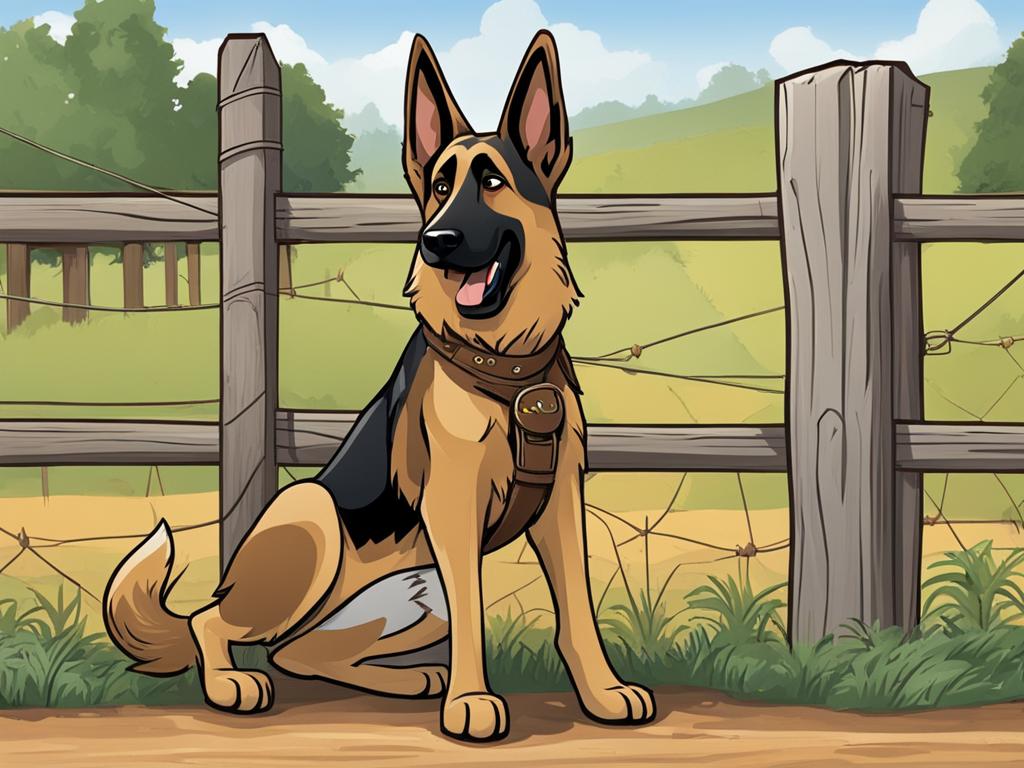
German Shepherds have long been recognized for their strong bond of loyalty and commitment to their owners. Renowned for their roles beyond herding, these formidable canines have proven indispensable in various spheres such as law enforcement and search and rescue. A testament to their versatility and intelligence, these dogs have seamlessly transitioned from pastoral fields to becoming a vital component of public safety teams across the globe.
German Shepherds: Law Enforcement and Farm Work
The embodiment of diligence and reliability, German Shepherd dogs have been integral to law enforcement agencies. Their German Shepherd loyalty, coupled with their innate protective instincts, makes them ideal partners in crime prevention and public safety. In contrast to their commanding presence in law enforcement, German Shepherds have retained their hereditary skills in herding, making them just as proficient in farm work as they are in patrolling urban environments.
Training Needs for German Shepherd Cattle Dogs
To harness the full potential of a German Shepherd within a farm setting, early and comprehensive herding dog training is paramount. Owing to their high levels of energy and intelligence, it becomes essential to implement a rigorous training regimen that not only refines their herding instincts but also instills discipline and control. Techniques specifically tailored for German Shepherds can optimize their capabilities as both a cattle dog and as a protective addition to the ranch.
With the right approach, German Shepherds can achieve remarkable feats, demonstrating not just the ability to herd livestock with precision, but also to serve as a law enforcement canine, tackling a spectrum of tasks that benefit communities. In both roles, these dogs are not just valued for their physical prowess, but for their unwavering commitment to their responsibilities—a remarkable blend of companionship and duty.
Instinctive Herders: The Pembroke Welsh Corgi
Despite their diminutive size, the Pembroke Welsh Corgi stands as a testament to the phrase “size isn’t everything.” With a lineage tracing back to its function as a historical herding breed, these compact herders boast a remarkable agility that defies their small form. Initially bred for herding cattle, the Corgi would nip at the heels of larger animals, a strategic move facilitated by their low-to-ground stature.
Small Stature, Big Herding Capabilities
Renowned for their prowess in Pembroke Welsh Corgi agility courses, this breed exhibits an energetic temperament and a dutiful eagerness to herd, competencies that have endured since their days in the pastures. This small but mighty dog has continued to dazzle with its remarkable ability to maintain control over sheep and cattle despite their relatively modest height of just 10 to 12 inches tall.
Historical Roots of the Pembroke Welsh Corgi as Herders
The Pembroke Welsh Corgi’s heritage as a herder runs deep, with their origins deeply embedded in the tapestry of pastoral life. These dogs are genetically disposed to the farm setting where their ancestors once flourished as indefatigable herders. Faithful and vigilant, they carry the legacy of their predecessors with a contemporary spin, participating in agility trials that showcase the very skills that made them invaluable to shepherds of old.
| Breed Characteristics | Description |
|---|---|
| Height | 10 – 12 inches |
| Weight | 24 – 30 pounds |
| Coat Type | Medium-length double coat |
| Typical Colors | Red, Sable, Fawn, Black & Tan, with or without white markings |
| Role | Historical herding breed, modern agility competitor |
| Temperament | Energetic, Loyal, Protective |
Cattle Herding Dogs for All Weather Conditions
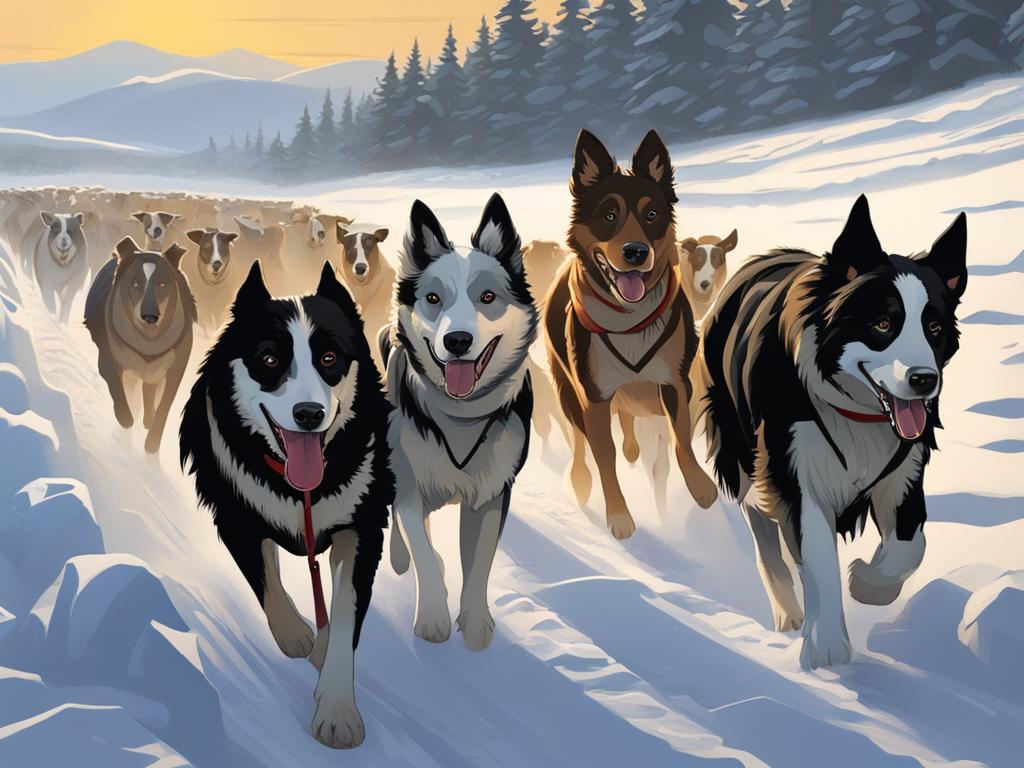
Among the various breeds of herding dogs, some stand out for their ability to perform in the most demanding climates. These all-weather herding dogs are the epitome of resilience and versatility, making them ideal companions for handlers facing the challenges of harsh environments.
Adaptation to Harsh Environments
Adaptable herding breeds have evolved to maintain their performance under extreme weather conditions. Structurally, these dogs often have dense double coats that protect them against the elements, whether blasting winds, driving rains, or biting cold. Breeders have selected these dogs for traits that ensure they can navigate varying terrains and withstand the fluctuations of outdoor working life, making them excellent breeds for harsh climates.
Breeds Suited for Cold Climates and Mountainous Regions
In the mountainous regions where temperatures can plummet, certain herding dog breeds are unfazed by the cold, demonstrating their suitability as all-weather herding dogs. With thick fur and sturdy builds, they showcase their herding expertise without skipping a beat, irrespective of icy conditions.
Training and Management of Herding Dogs
The art of training herding dogs is a nuanced process that demands a blend of firm authority and nuanced canine communication. Proficiency in herding dog training techniques not only improves the dogs’ response to their handlers but also enhances their professional herding skills. These animals possess innate abilities for herding, yet without proper guidance, their potential can go untapped.
Establishing Authority and Effective Communication
To effectively train a herding dog, it’s essential to establish a hierarchy where the handler holds a position of leadership. This bond forms the cornerstone of canine communication, facilitating a mutual understanding of commands during herding tasks. It’s through this disciplined rapport that instructions are given weight and dogs learn to follow cues with precision.
Advanced Training Methods for Professional Herding Dogs
Herding dog training techniques have evolved, focusing on enhancing the breed-specific attributes and instinctual patterns. Through advanced training methods, handlers can hone a dog’s ability to navigate complex herding scenarios with agility and intelligence.
| Exercise Type | Purpose | Benefits |
|---|---|---|
| Directed Fetching | To develop directional commands understanding | Improves response to left/right commands |
| Boundary Training | To teach area limitations within herding | Encourages spatial awareness and control |
| Obstacle Courses | To simulate real-life herding terrain and challenges | Enhances problem-solving and agility |
| Obedience Drills | For reinforcing discipline and command recognition | Strengthens handler-dog communication |
Each herding breed thrives with specific exercises tailored to their intrinsic herding style. Border Collies, for instance, benefit from drills that target their intense focus and directional work, while Australian Shepherds may excel with agility-based challenges that play to their athleticism.
- Consistency: Regular training sessions reinforce learned skills.
- Patience: Allowing the dog to learn at its own pace ensures lasting comprehension.
- Reward-Based Motivation: Treats and praise make the exercises more engaging for the dog.
Rigorous training, underpinned by empathy and understanding, refines the dogs’ herding instincts and prepares them for the complex demands of working on a farm. As they master professional herding skills, these dogs not only become invaluable aids to handlers but also pursue a role they are instinctively passionate about.
The Loyal and Protective Great Pyrenees
Renowned for their Great Pyrenees guardianship, these majestic canines hold a prestigious position as a livestock protector breed. Their presence on the farm goes beyond mere appearance; they embody a history of dedication, safeguarding livestock against the threats of nature with a vigilance matched only by their unwavering loyalty. Embracing their role as the gentle farm giant, Great Pyrenees dogs exhibit a harmonious balance of a warm-hearted disposition towards their family and stern watchfulness over their charges.
With origins tracing back to the Pyrenees Mountains, these dogs have been the guardians of sheep and other livestock against the predations of wolves and bears. Their instinctual protective nature is coupled with a serene and nurturing temperament, making them particularly suited for farms that require a dual-purpose dog—both a capable protector and a compassionate family pet.
Despite their large size, the Great Pyrenees integrates well within farm life, often becoming an indispensable resource for farmers and ranchers. Their thick, weather-resistant coat prepares them for the rigors that come with their duties in outdoor environments. Through early training and socialization, their innate protective instincts are honed, ensuring that the safety of their herd remains uncompromised.
When considering their role on the farm, it’s essential to understand the traits that define the Great Pyrenees as both a guardian and working breed:
| Trait | Description |
|---|---|
| Gentle Giant | Despite their size, they are affectionate and gentle with family and animals alike. |
| Protector Instinct | Naturally protective, their vigilant presence deters predators on the farm effectively. |
| Weather-Resistant Coat | A thick, white coat allows them to withstand harsh weather conditions without hindrance. |
| Independent Thinker | Great Pyrenees often take charge in guardian scenarios, displaying autonomy in their role as protectors. |
| Companionable | They thrive on companionship and are known to form close bonds with the livestock they guard. |
The Great Pyrenees isn’t just a dog; it is a dedication made manifest in four-legged form. Their role is to serve, protect, and form an integral part of the lives of those they watch over. In every way, they encapsulate the essence of what it means to be a loyal and protective guardian of the farm.
Conclusion
Whether you’re a seasoned rancher or a novice farmer, the decision to incorporate a cattle herding dog into your livestock management system is a pivotal one. The journey begins with choosing herding dogs that are not only adept at the tasks required but also harmonize with your farm’s environment and your livestock’s needs. Each breed, from the nimble Australian Shepherd to the stalwart Great Pyrenees, brings its unique set of attributes to the pasture.
Choosing the Right Cattle Herding Dog for Your Farm
When selecting a herding companion, deliberation over temperament, size, and energy levels should match the specific challenges present on your grounds. Consider the type of livestock and terrain they will navigate – the intuitive Border Collie might be the frontrunner for sheep herding, while the durable Australian Cattle Dog might thrive in more rough-and-tumble surroundings. The decision will ultimately shape the effectiveness and efficiency of your livestock management.
Maintaining the Health and Training of Your Herding Dog
A commitment to maintaining herding dog health and consistent herder training upkeep is essential for the welfare and utility of your herding dog. Regular veterinary check-ups, proper nutrition, and ample exercise will ensure their physical prowess remains top-notch. Concurrently, ongoing training reinforces skills and fortifies the bond between dog and handler, leading to seamless operations on the farm. A well-cared-for herding dog is invariably a farm’s most cherished asset, capable of transcending its role as a worker to become a loyal and beloved family member.
FAQ
What traits make a dog excellent for cattle herding?
Top cattle herding breeds exhibit traits such as tenacity, speed, intelligence, and a strong herding instinct. They are able to manage livestock efficiently, respond to training, and work under varying farm conditions.
How do herding dogs contribute to livestock management?
Herding dogs play a crucial role in livestock management by moving, guarding, and holding livestock. Their capabilities boost ranch dog efficiency, making them invaluable working farm dogs.
Why are Australian Cattle Dogs especially suited for extreme weather?
Australian Cattle Dogs are known for their resilience in various weather conditions, including intense heat and rain. Their heritage provides them with a smooth double coat and an energetic temperament ideal for extreme weather herding.
What makes the Australian Shepherd a versatile farm dog?
The Australian Shepherd is known for its high intelligence and agility, making it a versatile and agile herding dog. They are quick learners and adaptable, capable of handling different herding tasks on the farm.
What is characteristic of a Border Collie’s herding strategy?
Border Collies employ an intense gaze and calculated movements to herd and control livestock. Recognized for their advanced livestock management skills, they are considered active herding breeds that rely on instinct and intelligence.
Are German Shepherds suited for both law enforcement and farm work?
Yes, German Shepherds are highly versatile, displaying loyalty and intelligence that make them suitable for law enforcement, service roles, and herding dog training on farms.
Can small dogs like Pembroke Welsh Corgis be effective herders?
Absolutely! Despite their size, Pembroke Welsh Corgis have a historical role as herders, using their agility and instinctive behaviors to manage larger animals, making them a compact herder with big capabilities.
What adaptations do herding dogs have for different weather conditions?
Many cattle herding dogs have special adaptations such as long-haired or double coats to protect them from cold weather conditions. Adaptable herding breeds must also maintain their high energy levels and capabilities in all environments.
What’s important when training herding dogs?
Training herding dogs effectively involves establishing authority, using advanced training methods, and clear communication between the dog and handler. Ongoing professional herding skills development and reinforcement are key.
What roles can the Great Pyrenees fill on a farm?
The Great Pyrenees serves as both a loyal and protective livestock guardian and a gentle farm giant. They are well-suited for guarding livestock against predators while also being affectionate family companions.
How do I select the right cattle herding dog for my farm?
Selecting the right herding dog involves assessing breed attributes, environmental conditions, the type of livestock, and your specific ranch needs. It’s also important to consider the maintaining herding dog health and ensuring consistent training and upkeep.