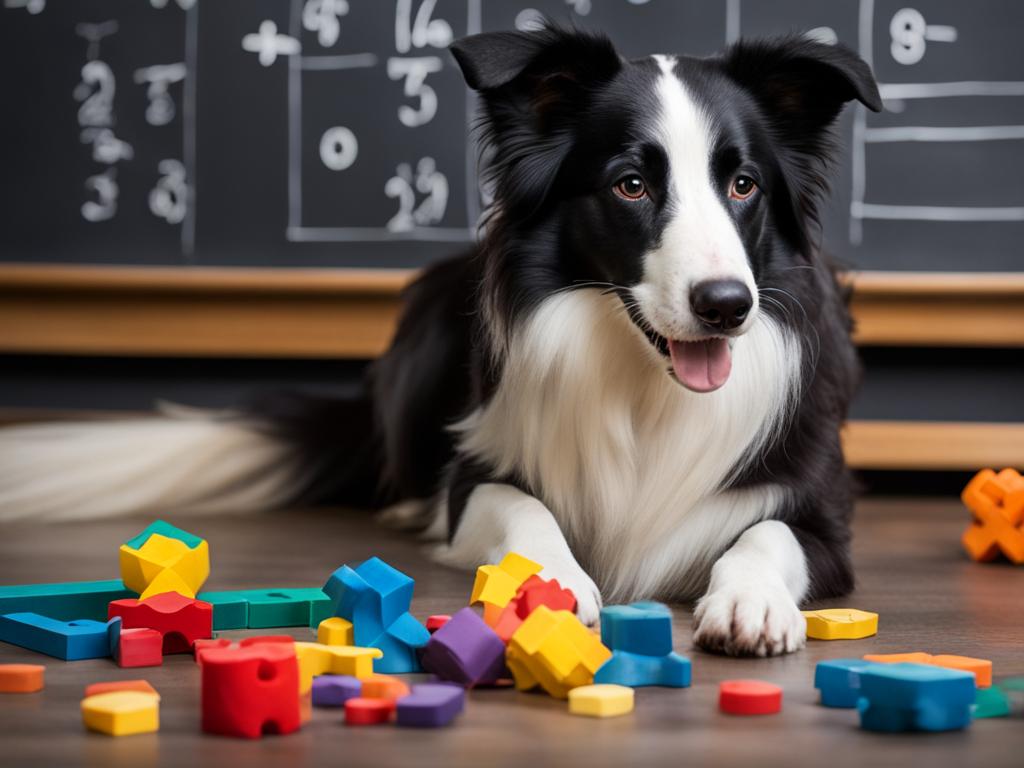
Hey there, dog lovers! Bet you’ve wondered which pooch could be dubbed the “Einstein” of the canine world, haven’t you? Prepare to be amazed by the fascinating world of canine intelligence, dog IQ, and particularly the Border Collie genius. Interestingly enough, these furry scholars are more than just adorable faces and party tricks; they possess cognitive abilities that might just put your high school valedictorian to shame.
Take, for example, a standout exemplar from the intelligent breeds lineup—a Border Collie known to have turned heads in the world of animal behaviorists. This breed has long since set the standard for doggy intellect, but the real crème de la crème pushes the boundaries far beyond what we ever imagined possible for canine cognition. Now, before your tail starts wagging with curiosity, let’s dive into this fascinating topic with gusto!
Key Takeaways
- Discover why Border Collies are often hailed as the pinnacle of canine intelligence.
- Uncover the traits that make certain dog breeds stand out in the IQ department.
- Be intrigued by the cognitive capabilities of dogs bordering on what you’d expect from a young child.
- Learn about the groundbreaking research that has transformed our understanding of dog intelligence.
- Be ready to have your mind boggled by feats of memory and comprehension in our four-legged companions.
The Trailblazing Intelligence of Chaser the Border Collie
If the name Chaser doesn’t ring any bells, you’re in for a treat. Imagine a dog who doesn’t just fetch a stick, but can identify it among hundreds of toys by its proper name—that’s Chaser for you. This Border Collie didn’t just learn a new trick; she revolutionized what we thought possible in animal cognition research.
The Unprecedented Learning of Proper Nouns
Chaser’s knack for proper nouns recognition was nothing short of remarkable. She left us all in awe, being the first four-legged whiz to learn over a whopping 1,000 nouns. It was a sort of ‘Who’s Who?’ of playthings – each toy a friend with a name, and Chaser, the maestro who never missed a cue.
Dr. John Pilley’s Revolutionary Training Approach
Behind every great dog is a great human, or so the saying should go. Dr. John Pilley wasn’t just teaching Chaser to roll over; his training methodology was cutting-edge, centered around an unshakeable bond and bespoke interactions. Forget one-size-fits-all—this was haute couture for dog training, paving the way for a whole new era of tail-wagging scholars.
Chaser’s Legacy in Canine Cognition
It’s not all just about fetching and sitting anymore. Thanks to Chaser, the game has changed. From understanding abstractions to pushing the theoretical envelope further than any pup before, her legacy in the realm of canine cognition keeps inspiring researchers to look beyond the wagging tails and into the minds of our furry geniuses.
| Attribute | Chaser’s Capabilities | Traditional Dog Training |
|---|---|---|
| Vocabulary | Over 1,000 proper nouns | Basic commands |
| Cognitive Skills | Abstract concept understanding | Limited to conditioned responses |
| Training Method | One-on-one personalized interaction | Generalized approach |
| Impact on Research | Groundbreaking insights into animal cognition | Minimal contribution to cognitive understanding |
So next time you toss your dog a toy, think of Chaser and smile. You’re not just playing fetch—you’re engaging in an intellectual exchange, a nod to the incredible potential nestled within your playful pooch.
Understanding Canine Intelligence: More Than Just Commands
When you think about dog intelligence, don’t just picture a pup that sits or stays on cue. You’re not looking for a living, breathing remote-controlled toy, but a companion whose cognitive understanding can astonish and delight. Now let’s dive deeper into the intricate weave of a dog’s mind, beyond the tail wags and excited barks. It’s not just about commands; it’s about conversations and connections.
Distinguishing Between Obedience and Comprehension
Obedience is rather straightforward—your furry friend hears a command and follows through, hoping for a treat or a pat on the head. But comprehension? That’s where the true measure of intelligence winks at us from the shadows. Consider Chaser’s groundbreaking achievements. This wasn’t just a dog leaping through hoops; this was a sentient being, understanding words, and acting on them with purpose.
The Importance of Play and Positive Reinforcement
Got treats? Sure, they work, but when it comes to fostering that brilliance nestled in your dog’s noggin, playtime and a good ol’ thumbs-up (or perhaps a loving scratch behind the ears) do wonders! Positive training methods are the gold standard for tapping into your dog’s potential. Let joy lead the way and watch them not only follow commands but understand and innovate upon them!
| Training Aspect | Obedience-Based Approach | Comprehension-Focused Approach |
|---|---|---|
| Goal | Execution of Commands | Cognitive Engagement |
| Methods Used | Repetition and Rewards | Interactive Play and Rewards |
| Role of Trainer | Commander | Guide and Companion |
| Outcome for Dog | Conditional Response | Enriched Understanding |
See the table? That’s more than decoration; it’s a blueprint. Align your training style more towards the right column—where a dog’s spark can turn into a dazzle, leading to a companionship that’s intelligently engaging. Now that’s something to fetch, wouldn’t you agree?
What Is the Smartest Dog? The Quest to Measure Canine IQ
Ever wondered how your four-legged friend measures up in the brain department? You’re not alone! The quest to quantify canine IQ isn’t just a fun fact for your next dog park visit—it’s a serious scientific endeavor. Researchers are on a mission to pinpoint what makes certain intelligent dogs stand out with their remarkable cognitive abilities. It’s as if they’re leafing through a “Who’s Who” of smartest breeds, with each contender barking up the tree of knowledge. And just when we thought we had it all figured out, along comes a genius like Chaser, setting the bar sky-high. How’s that for a “paw-spective”?
So, how is canine savvy assessed, you ask? Imagine if SATs were designed for your pup—except with more sniffing and far less #2 pencils. Experts analyze problem-solving skills and adaptability, determining if Fido’s really a furtive Fur-rd Einstein or just master of the “play dead” ruse.
Intelligence isn’t just about obediently sitting or fetching; oh no, it’s about understanding and engaging. It’s like they’re shaping the doggy Mensa, growing a community of pups who can do more than spin and shake hands. They’re upping the game from mere fetching to fetching with finesse—think of retrievers sorting recyclables from trash! Now that’s ‘ruffly speaking’, a genius move!
- Border Collies: They’re not just herding sheep; they’re practically doing calculus with their crouches and sprints.
- Poodles: Underneath that chic hairdo lies a whip-smart brain ready to unravel complex puzzles.
- German Shepherds: With a reputation as the go-to K-9 unit, they’re not just sniffing out trouble; they’re deducing it like canine Sherlocks.
Embrace the journey, dear reader, for the world of canine cognition is rich with mysteries waiting to be sniffed out. Every wagging tail has a tale of intelligence to tell, and while your buddy may not be the next Chaser, remember—in the grand fetch quest of life, every pup’s a winner!
Border Collies: A Breed Apart in Intellectual Prowess
When you think of a dog that combines brains with agile grace, the Border Collie leaps to mind. Renowned worldwide for their astute Border Collie intelligence and quick learning, this breed exhibits fascinating breed characteristics that make them the valedictorians of the canine world. What sets them apart is not just a knack for herding sheep but also their ability to engage in complex problem-solving tasks. Let’s delve into how these dogs showcase their smarts in ways that might just make you want to enroll in their class.
Chaser’s Exceptional Noun Recognition
Remember the name Chaser, the Border Collie who could put some humans to shame with her noun recognition skills? Her cognitive skills were off the charts, identifying over a thousand toys by name. This is no dog-and-pony show; it’s a clear example of the breed’s incredible learning capability, providing ample evidence that when you say ‘toy’, a Border Collie doesn’t just wag its tail—they remember which specific toy you’re talking about.
The Breed’s Instinctive Problem-Solving Abilities
Border Collies don’t just wait for instructions; they’re proactive, they’re solvers, they’re the doggy equivalent of a swiss army knife. Their breed characteristics include an innate intuition for problem-solving. Throw them a challenge, and they’ll jump at it, sometimes literally. It’s this intellectual agility that makes them standout performers in dog sports and real-life tasks where adaptability and smart decision-making are crucial.
Whether it’s navigating obstacle courses or offering companionship, a Border Collie’s intelligence ensures they’re more than just a quick study—they’re life-long learners. Their sophistication in processing cues and commands ensures that, as a Border Collie owner, you’ll need to keep your A-game on to keep up with them. So, while you may not have a thousand toys to name, a Border Collie will make sure you never run out of ways to be amazed by their brilliance.
Defining Dog Intelligence: Comprehension, Retrieval, and Communication
Welcome to the intriguing world of canine cognition, where the minds of our four-legged companions are as enigmatic as they are brilliant. You’ve seen dogs respond to commands, but have you ever stopped to wonder about the gears turning within their minds? Let’s decipher the markers of true dog intelligence—comprehension, retrieval, and communication.
Assessing Cognitive Abilities in Dogs
To truly gauge a dog’s intelligence, one must go beyond the obvious tricks and treats. It’s all about evaluating their ability to internalize language and grasp complex concepts. You’d be amazed at how your dog’s language skills can not just mimic human interactions, but also show a deep level of understanding that rivals toddlers.
How Language Mastery Expands the Bounds of Dog Intelligence
Digging deeper, the mastery of language in dogs like the esteemed Chaser reveals that language skills are not just for show and tell. This prowess is a window into the expanses of a dog’s cerebrum, pushing the bounds of what we know about animal communication. By wrapping their furry heads around language, they’re not just following commands—they’re engaging in a two-way street of dialogue.
The Role of Memory in Dog Learning Processes
Now, consider the role of memory retention in this dazzling display of dog intellect. Memory isn’t just a party trick of fetching the right toy—it’s the foundation upon which dogs build their knowledge of the world. Imagine every new word, command, or signal being a building block in the splendid skyscraper of your dog’s mind. Quite a view, isn’t it?
So, as we wag our way through the wonders of canine intelligence, remember that every tail wag, perked ear, and attentive gaze is a sign of a mind at work. Comprehension, retrieval, communication—these are the hallmarks of a profound intelligence that perhaps understands us better than we understand ourselves. Cherish it, nurture it, and always keep the conversation going.
Exploring the Mind of Man’s Best Friend
Did you know that when you’re tossing a ball to your furry friend, you’re engaging in an intricate dance of dog psychology and animal behavior? It’s true! What may look like a simple game is actually a complex cognitive exploration into the workings of canine minds. Now, let’s unleash the knowledge and dig deeper into what makes your pooch tick.
Consider this: your dog, upon hearing “fetch,” likely isn’t just responding to the command. Instead, they’re demonstrating an understanding of the term in conjunction with the object and action it entails. This showcases their ability to map cognitive concepts—a fancy way of saying that they can associate words with objects or actions, a cornerstone in the study of animal behavior.
And it gets even more fascinating. When your dog quizzically tilts their head as you chat about your day, they’re not just being adorable; they’re attempting to decipher your language. This is a testament to the profound complexity within their cognitive processes.
| Aspect of Canine Minds | How It Relates to Dog Psychology | Observable Behavior |
|---|---|---|
| Cognitive Mapping | Dogs can associate words with specific objects or tasks. | Retrieval of a named toy on command. |
| Problem-Solving | Canines can solve puzzles or navigate obstacles with or without human intervention. | Negotiating a treat puzzle successfully. |
| Social Cues Interpretation | Understanding human emotional states or intentions. | Consoling behavior or alertness to owner’s mood changes. |
| Memory Retention | Ability to remember commands, locations, and routines. | Following a known walking route or routine without prompts. |
It’s clear that deciphering the Rubik’s Cube that is your dog’s brain requires putting on your detective hat. Every wag, every bark, and every luminous gaze into your eyes is part of the intricate puzzle that is cognitive exploration. So next time you’re both out for a walk, take a moment to appreciate the wheelwork of thoughts spinning in your canine companion’s mind. Who knows? You might just learn a new thing or two about yourself in the process.
From Proper Nouns to Complex Grammar: Beyond Simple Tricks
So you think teaching your pooch to ‘sit’ or ‘stay’ is the pinnacle of dog training? Think again. The world of advanced dog training is embracing the intricate study of complex canine language and, yes, even grammar recognition. Chaser, the canine Einstein, didn’t just fetch toys; she comprehended sentences laden with multiple grammatical constructs. Can you imagine your furry friend dissecting syntax? Well, it’s happening!
But why stop at grammar? We’re not merely teaching dogs to understand different sounds but rather to process and respond to them within the context of human language. This revealing peek into the canine mind shows that their ability to learn goes beyond ‘simple tricks’. It’s a fascinating journey that involves decoding sentences, a feat once believed exclusive to humans.
- Recognize brand names and distinguish among a variety of commands
- Follow complex instructions that involve sequencing tasks
- Comprehend gestures in tandem with verbal cues
Imagine guiding your pup through a dynamic dance of commands that sound more like a lively conversation than a rigid training session. That’s the art and science of grammatical gymnastics for dogs—unveiling layers of their intelligence we’re just beginning to understand.
Prepare to be amazed as you embrace this expansion of dog-human communication. From proper nouns to profound paragraphs, our four-legged friends are joining the dialogue—one paw at a time.
The Human-Dog Bond: Enhancing Communication Through Language
Have you ever marveled at the connection you share with your four-legged friend? Well, the secret sauce to that unwavering bond is likely tucked away in the spoken word! Yes, embracing the art of conversation with your dog can blossom into a beautiful symphony of enhanced communication and shared understanding.
And the extraordinary tale of Chaser isn’t just about a dog learning a slew of names; it’s about bridging the gap between species through language. This remarkable journey not only serves to bolster the human-dog relationship but also illuminates the trail for empathy development that makes every tail wag and every affectionate gaze a testament to this profound connection.
Breaking Down Barriers with Words
Words— They are not just sounds or arbitrary vibrations to your canine companion. No, they are the keys that unlock the door to an enriched life side-by-side. Teaching Rover to comprehend ‘sit’ or ‘stay’ is kindergarten level; how about elevating your chat to discuss the finer points of where the squirrel may have dashed off to?
Fostering Deeper Understanding and Empathy
When you and your pooch become conversationalists, you’re not just trading barks for words. You’re vesting in a mutual emotional stock that’s ripe for empathy development. Think of it as a silent nod that says, “I get you, buddy,” as your dog peers into your soul with those deep, understanding eyes. It’s a whisper in the wind, a shared silence, as you both admire the sunset after a heart-to-heart.
| Aspect of Communication | Benefit for Human | Benefit for Dog |
|---|---|---|
| Verbal Cues | Enhances clarity of commands | Better understanding of tasks and expectations |
| Emotional Language | Deepens the relational bond | Increases sense of security and well-being |
| Noun and Concept Recognition | Fun and rewarding teaching experience | Expanded mental stimulation and cognitive growth |
So, lay down the groundwork and build that vocabulary cathedral with your furry Einstein. Give a voice to their thoughts and a platform for their intelligence. After all, a conversation shared is a friendship squared! Let’s make every woof count, shall we?
The Influence of Play in Cognitive Development of Dogs
It’s all fun and games until someone learns something. That’s the mantra to adopt when considering the profound role of play-based learning in your pooch’s life. You’ve seen it firsthand: the way a dog’s ears perk up at the jingle of a toy, or the twinkle in their eye at the toss of a ball. This isn’t just entertainment; it’s cognitive enrichment, shaping their development in ways that sit and stay commands could never achieve alone.
The Connection Between Play and Learning
Understand this; play is not just a leisurely pastime for your furry friend—it’s a cornerstone of their cognitive toolbox. The leaps and sprints your dog takes during a game of fetch? That’s dog development in action. Canines learn about their environment, build social bonds, and improve cognitive functions through the power of play. Let’s not forget the side benefit—for every moment spent in play, you’re reinforcing that indispensable human-dog bond.
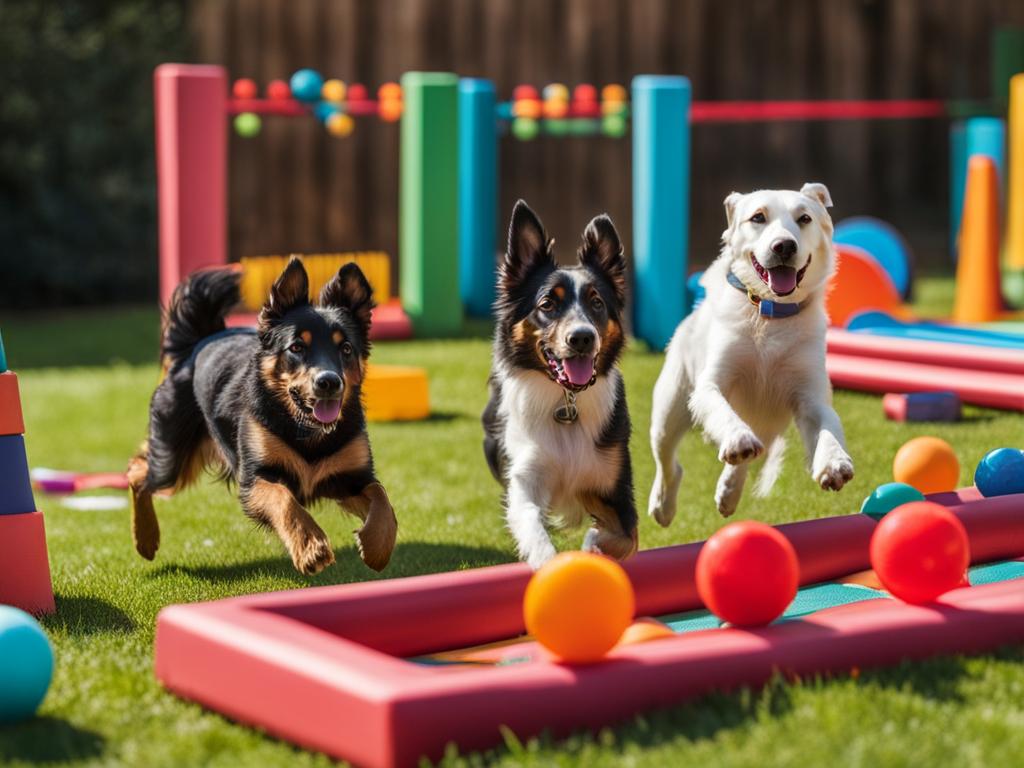
That tennis ball isn’t just a ball, by the way. It’s a tool that encourages cognitive tasks such as tracking, anticipation, and even stratagem—as your dog figures out where it will bounce next.
Practical Applications of Play-Focused Training Methods
So, how do you translate the science of play into actionable training techniques? Quite simple: turn lessons into games. Training sessions that incorporate play stimulate your dog’s mind and encourage a love for learning. Have you tried hiding treats around to enhance their sense-finding capabilities? Or using obstacle courses to boost their problem-solving skills? Training should be a joy, not a chore—for both you and your dog!
- Use fetch for teaching names of objects and improving recall.
- Incorporate hide-and-seek games to enhance searching skills and patience.
- Practice agility courses to fine-tune coordination and follow complex commands.
Remember, when you turn learning into a game, you’re not just training your dog. You’re gifting them a lifetime of cognitive enrichment—now that’s something to wag a tail about!
Conclusion
As we’ve journeyed through the saga of Chaser, the Border Collie with unparalleled ability, it’s become crystal clear that the bounds of canine potential are broader than we ever imagined. You’ve seen firsthand how a tail-wagging, four-legged friend has not only reshaped ideals but shown us a new zenith in animal cognition. It’s not just about teaching old dogs new tricks; it’s about recognizing the intellectual dynamo that is dog intelligence—that celebration of what paws and neurons combined can achieve.
Embracing the Full Potential of Canine Intelligence
Imagine leaning into the uncharted territories of your dog’s mind, acknowledging the wealth of potential hidden beneath that furry exterior. It’s about more than just sit, stay, and roll over; it’s about discovering the Einstein in your loyal companion. By nurturing their abilities and continuously refining our approaches to training, you not only boost their cognitive capabilities but also compliment the profound understanding these amazing animals possess.
Inspiration from Chaser’s Story for Dog Owners and Trainers
Let Chaser’s story light a fire under your convictions; let her legacy be your beacon of training inspiration. Her impressive feats are not mere anecdotes; they are blueprints for fostering the deep, intricate bonds we share with our canine cohorts. Through Chaser’s narrative, your perspective on training can transform, inciting a grand celebration of dog intelligence. Empower your four-legged companions to tread the paths of their untapped intellect for, as Chaser has proven, they’re practically capable of boundless wonders.
FAQ
What benchmarks do the smartest dogs like Chaser set in canine intelligence?
Oh, they raise the bar sky-high! Dogs like Chaser demonstrate that canine intelligence includes not just obedience but also sophisticated language comprehension, complex problem-solving, and the ability to remember over 1,000 proper nouns. These furry Einsteins are redefining the term “dog IQ” and showing the world that there’s more than tail-wagging going on upstairs.
How did Dr. John Pilley’s training methodology contribute to Chaser’s intellectual feats?
Dr. Pilley wasn’t just tossing a bone; he was tossing the playbook! His revolutionary one-on-one training approach went beyond fetch; it involved interactive play and positive reinforcement to unlock Chaser’s potential. Think less drill sergeant and more nurturing mentor – fostering a bond that turned a Border Collie into a noun-knowing, problem-solving prodigy.
Can you differentiate between simple command obedience and cognitive understanding in dogs?
It’s the difference between a dog that sits when told versus one that brings you your slippers, the morning paper, and a cup of coffee. Cognitive understanding implies a dog, like Chaser, knows the “why” behind the “sit”, recognizing commands as more than mere noises but as meaningful cues requiring specific actions or responses.
What makes the intelligence of Border Collies stand out from other breeds?
Border Collies are like the valedictorians of the canine world. They come hardwired with an amazing knack for learning, coupled with instinctive problem-solving acumen that makes them ace in cognitive skills and noun recognition. They’re not just herding sheep; they’re outsmarting them too!
How does memory retention shape a dog’s learning process?
Imagine if you could remember the flavor of every cookie you’ve ever eaten. For dogs, memory retention is their secret sauce to learning – it’s how they file away all the commands, tasks, and toy names (over 1,000 if you’re Chaser) so they can retrieve this knowledge faster than a frisbee on a windy day.
Why is understanding the psychology and behavior of dogs essential?
To get inside their furry heads, of course! Understanding dog psychology and behavior is like being a canine Sherlock Holmes. It helps us deduce how dogs like Chaser interpret their world, how they link names with objects, and how they give those mournful “I’m sorry” eyes when they’ve nabbed the last slice of pizza.
How do complex grammar understanding and communication challenge traditional dog training methods?
Dogs understanding complex grammar is like them jumping from barking to reciting Shakespeare. It challenges trainers to think beyond “sit” and “stay” and start considering “could you kindly fetch the slippers from the bedroom, please?” It’s about engaging with our furry friends on a whole new intellectual level.
How does enhanced communication with dogs deepen our bond with them?
Teaching Fido to understand words does more than impress your neighbors; it’s about creating a two-way street of understanding, empathy, and mutual respect. It turns “man’s best friend” from a phrase into a conversational partner, capable of shared experiences and jokes—well, sort of.
What are the practical applications of play-focused training methods like those used with Chaser?
Play isn’t just fun and games; it’s a dog’s classroom, gym, and social club all rolled into one. Play-focused training methods are the Swiss Army knife of dog teaching – they keep Fido’s brain engaged, body active, and tail wagging. They’re shaping smarty-paws that love to learn!