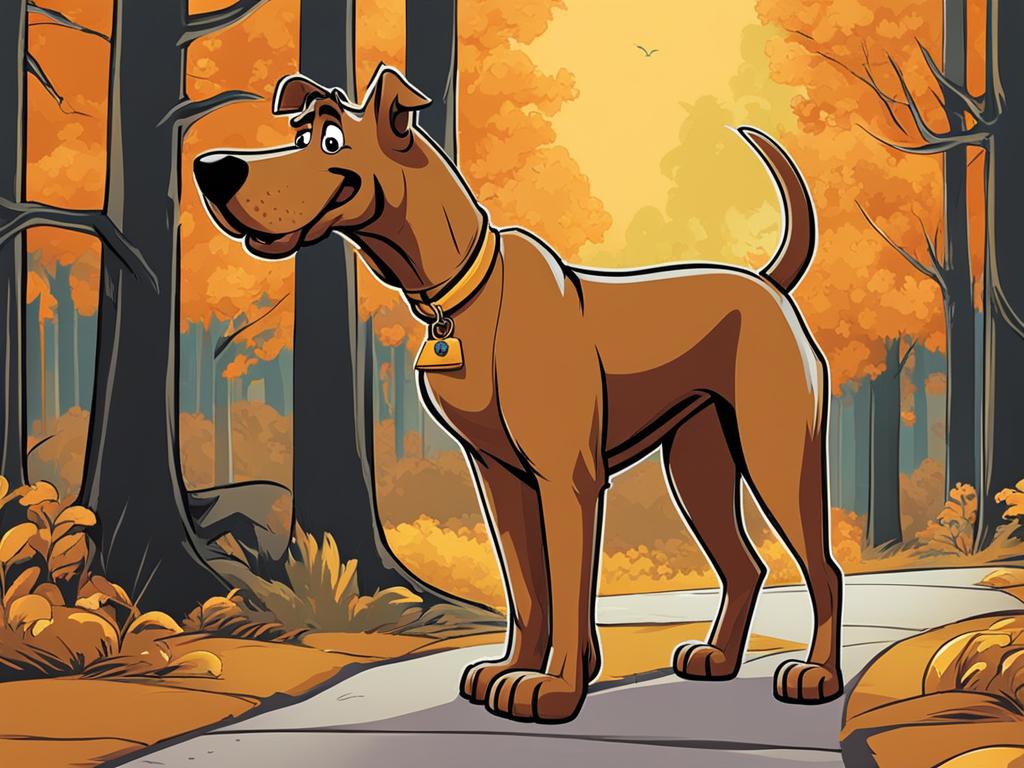
Have you ever pondered over the breed of the world’s most beloved cartoon dog mystery solver, Scooby-Doo? With over five decades of meddling in spooky shenanigans, it’s time to unveil the truth behind this iconic character’s lineage. Straight from the quirky animation desks of Hanna-Barbera, Scooby-Doo is officially recognized as a Great Dane, but not just any ordinary one. Scooby-Doo facts tell us that his creator, Iwao Takamoto, opted for a twist on the traditional Great Dane appearance, gifting Scooby with characteristics such as a sloped back and bow legs to infuse humor into his animated portrayal.
Your affection for this lovable canine is about to grow, as we present the fascinating details that differentiate Scooby from his real-life breed counterparts. While Scooby may not quite align with the American Kennel Club’s standards for the noble Great Dane, his unique traits have made him a timeless character we can’t help but adore. So buckle up, Scooby fans, for a delightful deep dive into the cartoon dog mystery that has finally been solved.
Key Takeaways
- Scooby-Doo is a distinctive take on the typical Great Dane, highlighting a creative spin on the breed’s standards.
- The design of Scooby-Doo defies the breed’s regal traits for a more whimsical, approachable character.
- Scooby-Doo facts show a deliberate choice in his comical features to distinguish him in the animated world.
- Understanding Scooby-Doo’s breed gives fans a greater appreciation for the careful thought put into his character by creator Iwao Takamoto.
- Scooby-Doo continues to remain a monumental figure in pop culture, with his breed being an integral part of his identity.
Unveiling the Breed of Scooby Doo
Dive into the world of classic Hanna-Barbera cartoons and explore the surprising characteristics of Scooby Doo’s breed. Behind the affable and iconic Scooby-Doo of the mystery-solving team lies the blueprint of an illustrious breed—the Great Dane. Despite his unconventional appearance as Iwao Takamoto’s creation, Scooby-Doo shares an ancestry with these noble canines, often deemed the “Apollo of Dogs.” Here, we unveil the Great Dane traits and how this beloved animated character stands apart from the pack.
The Great Dane – A Noble Cynosure
An epitome of elegance and balanced proportions, Great Danes are revered for their commanding presence. However, when you glance at Scooby’s distinct guise, it’s evident that he was designed to embody a more whimsical version of the Great Dane characteristics.
Contrasts Between Scooby and a Traditional Great Dane
While Great Danes are pillars of poise, Scooby Doo presents a set of features that playfully subvert the breed’s standards. It’s this differentiation that endears Scooby to audiences of all ages, resonating with a charm all his own.
| Feature | Traditional Great Dane | Scooby-Doo |
|---|---|---|
| Stature | Imposing and upright | Slouched with a humpback |
| Legs | Straight and strong | Bowed in comical fashion |
| Chin | Prominent and sturdy | Undersized, adding to facial expressions |
| Coloration | Solid or neatly marked coats | Signature brown with black spots, rarely seen in purebreds |
Iwao Takamoto’s Creative Twist on Scooby’s Appearance
By going against the grain and embracing a distinctive path, Iwao Takamoto infused Scooby-Doo with a visual flavor at odds with Great Dane norms. This iconic character’s appearance was not a random act but an intentional design, birthing one of the most memorable Hanna-Barbera cartoons. Takamoto’s legacy continues as we celebrate Scooby’s unique charm, a hallmark of animation history.
Shaggy’s Best Friend: Scooby Doo’s Enduring Appeal
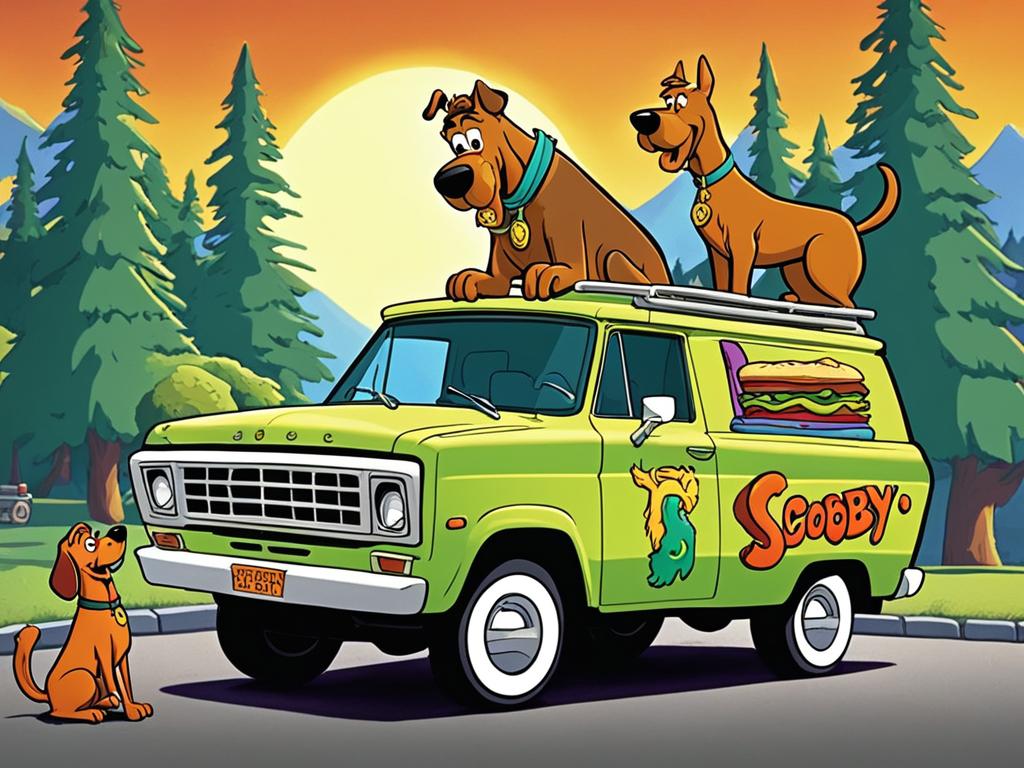
As you relive the adventures of Mystery Inc., it’s the bond between Scooby-Doo and Shaggy Rogers that truly captures the essence of the animated series. This inseparable duo has not only given us countless moments of laughter but has also taught us the value of friendship and bravery in the face of fear. Let’s explore the elements that have secured Scooby-Doo’s place as a cultural treasure.
- Fearful Yet Fearless: Although Scooby and Shaggy are known for their jumpiness, their antics when confronting spooky situations have endeared them to generations.
- Scooby Snacks: Who can forget the power of a Scooby Snack? This treat sometimes seems to possess the magic needed to embolden our canine hero, illustrating the comedic side of positive reinforcement.
- The Language of ‘Ruh-roh’: Scooby-Doo’s unique speech, marked by his iconic phrase “Ruh-roh!”, has become synonymous with both the character and the series itself, showcasing the Scooby-Doo appeal.
From their shared love of food to their unshakeable loyalty, the relationship between Scooby and Shaggy is at the heart of the Mystery Inc. gang’s dynamic. It’s hard to imagine one without the other, as each brings out the best—and the bravest—in their counterpart. The legacy of Scooby-Doo continues to grow, as new fans discover the charm of this timeless duo, cementing the series as a staple in the realm of family-friendly entertainment.
Taking a Deeper Dive into the Cartoon Great Dane
When you think of the iconic Scooby-Doo design, images of a giant, lovable dog with a myriad of unique traits instantly come to mind. This classic character from cartoon animation diverges from the typical Great Dane blueprint to create a one-of-a-kind pooch that has captured hearts for generations. Let’s lift the veil on what makes Scooby-Doo stand out in the pantheon of animated canines.
A Tail of Tales: Scooby’s Unique Design Explained
The design of Scooby-Doo owes its charm to a playful take on the Great Dane’s unique traits. Iwao Takamoto, the mastermind behind Scooby’s character, bucked the trend of the perfect pedigree pooch and instead delivered a mirthful, gangly fellow that has become emblematic of his kind. This deviation wasn’t an accident; it was a deliberate attempt to inject vivacity and a relatable quirkiness into Scooby’s profile.
Consider Scooby’s expressive tail, often seen wagging in unison with his emotions, acting as a barometer for his feelings during suspense-filled adventures. Together with his robust coloring and those unmistakably large, soft eyes, Scooby is as distinctive as they come.
From Bow-Legs to Spots – Features Setting Scooby Apart
The cartoon animation industry often amplifies certain features for effect—that’s the joy of the medium. In Scooby’s case, it’s those rounded bow legs and the gentle slope of his back that provide a comical framework for his lovable hijinks. Unlike the upright and poised posture of a standard Great Dane, Scooby’s design includes approachable, laughable elements that contribute to his endearing personality.
The spots scattered across Scooby’s body are like his own personal constellations, a starry map to a unique individuality. Even the tone of his voice—a baritone tinged with a hint of timidity—enriches his character. These distinctive peculiarities have solidified Scooby’s place as a beloved figure in cartoon animation, just as noted for his bold-hearted escapades as for his desire to retreat behind Shaggy’s legs.
Over time, this Great Dane has not just been a sidekick, but a key element in translating the adventurous spirit of Mystery Inc. from mere animation cells to a vivid, emotional reality. Scooby-Doo is not just a character; he is a testament to creativity and the enduring power of well-crafted cartoon animation.
A Timeline of Mystery – The Birth of Scooby Doo
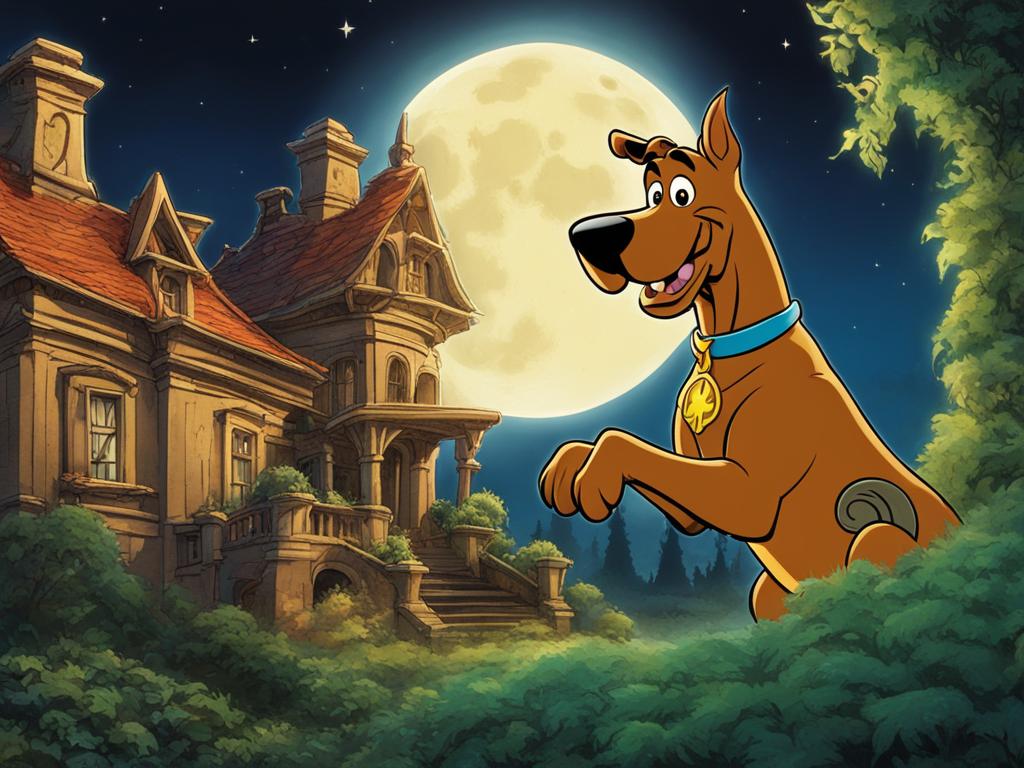
Step into the mystery cartoon history and discover the Scooby-Doo origin, an adventure that began over half a century ago. On September 13, 1969, the animated series “Scooby-Doo, Where Are You!” made its debut, showcasing a fearfully heroic Great Dane and his friends solving eerie puzzles. This pivotal year marked the beginning of what would become a cornerstone of cartoon history. Let’s take a nostalgic look back at this significant milestone.
The 1969 animated series not only introduced Scooby and the gang but also kicked off a prolific era of story-telling where ghosts and ghouls were unmasked and the truth was always revealed, thanks to the meddling kids of Mystery Inc. What started as a Saturday morning show grew into a beloved global franchise. Your journey alongside Scooby, Shaggy, Fred, Velma, and Daphne has been full of suspense, laughter, and most importantly, delightfully solvable mysteries.
This historic moment in animation paved the way for numerous spin-offs, feature films, and even theatrical releases. It signified the relentless appetite for tales of the spooky and supernatural tempered with humor and camaraderie. Mysteries that found their solutions in logic and bravery rather than the paranormal became the beloved format that generations have cherished.
As we trace the evolution of Scooby-Doo through the annals of mystery cartoon history, it’s evident that the show did more than entertain. It fostered a spirit of curiosity and fearlessness, an unquenched thirst for answers, and a prime example of everlasting friendship. These timeless values nestled within the show are what have cemented Scooby-Doo’s place in both television history and the hearts of fans everywhere.
Scooby Doo’s Voices Throughout the Years
The unmistakable voice behind the beloved character of Scooby-Doo has been pivotal in bringing this animated canine to life. Since his first “Ruh-roh” in 1969, the legacy of voice actors of Scooby-Doo has echoed through the decades, leaving an indelible mark on the hearts of fans. Let’s delve into the talent behind Scooby’s iconic voice.
From Don Messick to Frank Welker: The Legacy of Scooby’s Voice
It was Don Messick, a legendary figure in the voice acting industry, who first gave voice to the nation’s most beloved Great Dane, Scooby-Doo. Messick’s portrayal captured the warmth, humor, and slightly cowardly yet lovable nature of Scooby from his debut up until 1996. His contributions to the character’s personality helped define the enduring charm of the series.
Bringing Scooby to Life: Voice Acting Throughout the Decades
After Messick, it was Frank Welker who took on the mantle of voicing Scooby-Doo, starting in 2002. No stranger to Mystery Inc., Frank Welker had been part of the franchise since the beginning, voicing various characters including Fred Jones. Welker’s versatility as a voice actor allowed him to also portray young Scooby in “Scooby-Doo Goes Hollywood”. His ability to breathe life into the character has maintained the same level of engagement and entertainment value for new generations of fans.
In addition to Messick and Welker, Neil Fanning provided voice work for Scooby in the live-action adaptations, showcasing the character’s transition from animation to the big screen. Each actor has contributed uniquely to Scooby’s enduring legacy, ensuring that every “Ruh-roh” retains the essence that has made Scooby-Doo a household name.
Where to Find Scooby Doo – Streaming Options
If you’re keen on diving into the delightful world of Scooby-Doo and the entire Mystery Inc. crew, you’re in luck. Whether you want to watch Scooby-Doo classics or discover the newer mysteries, various streaming services have got you covered.
If nostalgia is what you’re after, HBO Max might be your go-to platform. They offer a range of Scooby-Doo titles, including the original “Scooby-Doo, Where Are You!” series, for that old-school cartoon fix.
Perhaps you’re more interested in the live-action adventures of this beloved canine? Netflix streams the films “Scooby-Doo” and “Scooby-Doo 2: Monsters Unleashed,” perfect for a family movie night. But the fun doesn’t end there.
- HBO Max
- Scooby-Doo, Where Are You!
- What’s New, Scooby-Doo?
- Netflix
- Scooby-Doo (Live-Action)
- Scooby-Doo 2: Monsters Unleashed
For those who want the full Mystery Inc. experience, Boomerang is the treasure chest for Scooby-Doo content. There you can find the greatest variety of Scooby-Doo’s animated escapades, including over two dozen movies.
Dissecting Scooby’s Iconic Features with Genetics
You might find yourself curious about the canine genetics behind some of Scooby-Doo’s most iconic traits. While his physical appearance lends itself to cartoonish fun, it’s fascinating to ponder what an Embark dog DNA test might reveal about this beloved character. By exploring the hypothetical genetics of Scooby-Doo, we can appreciate the blend of science and fiction that brings such characters to life.
Chasing Genetics: A Look at Scooby’s High Prey Drive
Scooby-Doo, with his trademark enthusiasm for chasing after ghosts (albeit reluctantly at times), might leave you wondering if his high prey drive is embedded in his DNA. While no single gene variant is directly connected to this characteristic, many canine breeds exhibit a natural inclination to pursue. It’s one of those Scooby-Doo traits that’s both a nod to canine instincts and a unique twist to his personality.
The Colors of a Mystery: Exploring Scooby’s Unique Coat
The distinctive coloration of Scooby-Doo’s fur—dark brown with enigmatic black spots—could be reflective of the MC1R gene, which is responsible for the production of dark hair in dogs. However, the unique pattern that makes Scooby so recognizable is less likely to be attributed solely to genetics and more to the creative mind behind his creation.
Let’s envisage a comparative analysis had an actual Embark dog DNA test been conducted on Scooby-Doo:
| Trait | Potential Genetic Marker | Notes |
|---|---|---|
| Prey Drive | N/A | Common in many dog breeds; no single gene identified |
| Coat Color | MC1R gene (EE or Ee) | Predisposes Scooby to dark hair production |
| Coat Pattern | Unknown | More likely a result of creative license rather than a specific gene |
In the grand scheme of canine genetics, actual dogs like those tested with the Embark dog DNA test showcase a myriad of genetic variations contributing to their behaviors and appearances. While Scooby-Doo is a fun and fantastical representation of a Great Dane, delving into the genetics of his Scooby-Doo traits adds another layer to understanding our furry cartoon favorite.
Exploring Scooby Doo’s Canine Relatives
When you think of Scooby-Doo, the image of the lone, mystery-solving Great Dane might spring to mind. However, Scooby’s lineage extends beyond his immediate Mystery Inc. family, introducing a few charismatic canines that share his pedigree. Let’s meet the lesser-known members of the Scooby-Doo family, each bringing their own flavor to the ever-expanding Scooby-Doo universe.
Dooby-Doo and Skippy-Doo are Scooby’s siblings who embody the same adventurous spirit as their more famous brother but in their unique ways. While they don’t bask in the limelight quite as much, they certainly contribute to the richness of the Scooby-Doo narrative.
Just like their famous sibling, Dooby and Skippy stay true to the blend of comedy and mystery that defines their kin!
Moving to the younger generation, Scrappy-Doo bursts onto the scene with a daring attitude that often contrasts with his uncle Scooby’s cautious disposition. Scrappy’s no-nonsense approach to mystery-solving and his iconic “Puppy Power!” catchphrase have left an indelible mark on the franchise’s history.
Let’s take a closer look at how these characters compare:
| Name | Relation to Scooby | First Appearance | Personality Traits |
|---|---|---|---|
| Dooby-Doo | Sibling | The New Scooby-Doo Movies (1972) | Easygoing, Aspiring Actor |
| Skippy-Doo | Sibling | The New Scooby and Scrappy-Doo Show (1983) | Intelligent, Gifted |
| Scrappy-Doo | Nephew | Scooby-Doo and Scrappy-Doo (1979) | Fearless, Energetic |
Awareness of these relatives does more than expand our knowledge of the Scooby-Doo family; it offers a deeper appreciation for the storytelling that has kept the franchise fresh for generations. Remember, each member of the Dooby-Doo and Scrappy-Doo family has shared in the legacy of adventures, laughter, and the occasional fright.
What Kind of Dog is Scooby Doo
Have you ever wondered about the Scooby-Doo breed and what makes this canine character so special? Scooby-Doo, a globally recognized animated dog, is unmistakably a Great Dane. This breed is celebrated for its impressive stature, sleek grace, and heartwarming companionship. Despite Scooby’s comical and exaggerated features, his loveable and goofy personality, coupled with his loyalty to the Mystery Inc. gang, embodies the essence of a true Great Dane. Let’s delve into the unique characteristics that make Scooby such an iconic figure in animation.
In addition to his endearing nature, Scooby-Doo’s physical appearance also parallels many Great Dane traits. Although his design includes a few creative liberties—intended to add a touch of humor and eccentricity—Scooby’s overall size, shape, and demeanor are harmonious with that of the real-life breed. Here’s a closer look at how Scooby compares with his real-world counterparts:
| Feature | Scooby-Doo’s Traits | Typical Great Dane Traits |
|---|---|---|
| Stature | Large and imposing, yet charming | Regal and statuesque |
| Build | Slightly exaggerated with a rounder midsection | Athletic and muscular |
| Companionship | Strong bond with Shaggy and team | Affectionate and protective of its family |
| Coat | Distinctive brown with black spots | Smooth short hair, various colors and patterns |
As we explore the animated world created by Hanna-Barbera, we can appreciate how Scooby-Doo’s portrayal both respects and lovingly parodies the Great Dane breed. Your familiarity with Scooby’s antics and adventures enriches your understanding of this lovable and iconic Great Dane.
Scooby Doo’s Role in the Mystery Inc. Gang
If you’ve ever watched an episode of Scooby-Doo, you know that the Mystery Inc. gang wouldn’t be complete without their canine detective. Scooby Doo, with his uncanny knack for stumbling into critical clues, is much more than the group’s lovable pet; he’s a pivotal member of the clue-solving squad.
More Than a Mascot: Scooby’s Part in Solving Puzzles
Often at the forefront of unravelling the most perplexing puzzles, Scooby’s inadvertent bravery turns him into the hero time and again. While he may be a reluctant participant at times, his ability to sniff out the unusual often leads the Mystery Inc. gang to break the case wide open. His contributions as an engaging, if sometimes flustered, detective showcases that this dog has a knack for investigation.
The Treat that Motivates: Scooby Snacks Unpacked
There’s no denying Scooby’s love for a Scooby Snack. More than just a reward, these treats often provide the courage needed to face spooky situations. This food motivation, a trait you might find in many dogs, adds humor and relatability to the Mystery Inc.’s adventures, endearing Scooby even more to fans of the show.
| Character Trait | Description in Show | Contribution to Mystery Inc. |
|---|---|---|
| Curiosity | Scooby’s nose often leads him to discover hidden areas or items. | Helps uncover hidden clues. |
| Fearfulness | Despite being easily spooked, Scooby’s fright often uncovers critical info. | His reactions can trigger traps or reveal secrets. |
| Love of food | Scooby’s desire for Scooby Snacks is famously irresistible. | Provides motivation to overcome fears and participate in investigations. |
| Loyalty | Highly devoted to Shaggy and the gang. | Strengthens team unity and morale. |
Remember, Mystery Inc. wouldn’t solve half their cases without Scooby, as he often plays a much more significant role than most would expect from their four-legged friend. This canine detective’s love for Scooby Snacks and natural detective instincts makes him an irreplaceable member of the gang.
Scooby Snacks and the POMC Gene: A Genetic Twist
If you’ve ever wondered why Scooby-Doo’s eyes seem to light up at the mere mention of Scooby Snacks, you’ll be intrigued to learn that the explanation may stem from the realms of genetics. Specifically, the POMC gene, which holds sway over canine appetite, may lend scientific credence to his voracious snacking habits.
Unleashing Appetite: The Science Behind the Snacking
The POMC gene, or the Proopiomelanocortin gene, plays a critical role in regulating appetite and can significantly affect eating behavior in dogs. Some canines, like our beloved animated Great Dane, appear to have an unrelenting appetite that goes beyond the norm. While the show uses this trait for comedic effect, in the real world, variations in the POMC gene can lead to increased food-seeking behavior.
Scooby’s Endless Hunger: Blame It on the Genes?
Could Scooby-Doo’s endless quest for Scooby Snacks really be influenced by his genes? Although we’re talking about a cartoon character, the correlation between appetite and genetics is a fascinating aspect of canine behavior. Let’s take a closer look at how the POMC gene might manifest in a dog’s day-to-day food motivations. It’s curious to ponder whether Scooby’s exaggerated urges for treats could be explained by a type of POMC gene variant.
| Traits of POMC Gene Variant | Typical Canine Behavior | ‘Scooby-Doo’ Representation |
|---|---|---|
| Increased Food Motivation | Normal desire for treats | Exaggerated hunger for Scooby Snacks |
| Potential Overeating | Regular meal portions | Insatiable appetite despite an active lifestyle |
| Weight Gain Susceptibility | Maintained weight with balanced diet | Constant snacking without visible weight gain |
Maintaining an awareness of your own pet’s eating habits is important, especially since an understanding of genetics can provide insights into their health and well-being. While Scooby-Doo’s antics are purely for entertainment, the canine inclination towards treats can have real-world implications, and it’s worth keeping a watchful eye — just as you would monitor the snack inventory to prevent any mysterious disappearances, a la Scooby-Doo style!
Scooby-Doo’s Cultural Influence and Popularity
For generations, Scooby-Doo has been a beacon in the animation sky, dazzling as both a cherished cultural icon and a purveyor of influence beyond the bounds of TV screens. Your memories might flutter back to the delightful frights of chase scenes synonymous with the Mystery Inc. gang, or perhaps the melodious sound of Scooby’s own “Ruh-roh!” that has echoed through the halls of pop culture history like a familiar friend.
As a vanguard of animated entertainment, Scooby-Doo has not just occupied the airwaves but settled into the heart of our cultural fabric. His legacy is unmistakable, a testament to the remarkably human qualities found within this canine hero; loyalty, courage amidst fear, and a love for snacks that might rival our own. Through his misadventures, Scooby has, along with Shaggy and the entire Mystery Inc. crew, emboldened us to confront the mysterious, the eerie, and the uncertain while still being able to share a laugh.
Scooby’s expansive journey, from a mere character in an animated series to an admired cultural icon, reflects not just a love for a goofy Great Dane but also our own fondness for stories that bring us together in suspense and comedy. This beloved canine’s impact strides far beyond television, playing a part in novels, comics, and countless merchandise, truly embedding the Scooby-Doo legacy deeply within the cultural psyche.
What’s more, Scooby’s connection with viewers is eternal, transcending time as new generations embrace the fear, the fun, and the camaraderie that Mystery Inc. represents. The impact of Scooby-Doo is a continuously unfurling narrative – a testament to the enduring love between a dog and his friends, a narrative that encourages each of us to join the chase, to solve the mystery, and to always be in the company of friends.
Conclusion
As we wrap up our exploration, it’s clear that the playful divergence from a Great Dane’s traditional features has solidified Scooby-Doo’s breed mystery as an unforgettable element of his character. His distinct design, marked by a drooping back and unique spots, has not only infused humor into the series but has also made him an iconic cartoon Great Dane known across the world. This clever twist on his breed characteristics has contributed significantly to his comedic charm, resonating with audiences and ensuring his widespread recognition.
The escapades of Scooby-Doo and the Mystery Inc. gang have persistently captured our imaginations, becoming a cherished part of childhoods and family entertainment for generations. His portrayal as a symbol of friendship and bravery—showing courage in the quirkiest of ways—exemplifies the lasting impact of this endearing and courageous character. It’s not just the mystery that keeps you coming back but the warmth and adventures that unfold in each episode of their journey.
As a beacon of animated storytelling, the evolution of Scooby-Doo from a simple character to a pop culture legend speaks volumes about the enduring legacy of this lovable Great Dane. His role in uniting viewers through shared experiences of laughter and suspense underscores the depth of his impact. Whether you’re revisiting fond memories or discovering his antics for the first time, Scooby-Doo stands as a timeless testament to the power of animation in bringing joy and excitement to our screens.
FAQ
What breed is Scooby-Doo?
Scooby-Doo is officially a Great Dane, with some unique and comical design features that differ from the typical breed characteristics.
Who created Scooby-Doo’s character design?
Scooby-Doo was designed by Iwao Takamoto of Hanna-Barbera, and he intentionally included features opposite of a typical Great Dane to give the character a distinct and humorous appearance.
What are some of the unique traits of Scooby-Doo’s design?
Scooby-Doo exhibits a sloped back, bow legs, an undersized chin, and a brown coat with black spots, which are all unconventional for a Great Dane.
When did the original “Scooby-Doo, Where Are You!” series premiere?
The original “Scooby-Doo, Where Are You!” animated series premiered on September 13, 1969.
Who has provided the voice for Scooby-Doo over the years?
Don Messick was the original voice of Scooby-Doo, and the role has been voiced by Frank Welker since 2002. Other notable voice actors include Neil Fanning in live-action adaptations.
Where can I stream “Scooby-Doo, Where Are You!” and other related series?
You can stream the original series and other Scooby-Doo content on platforms like HBO Max, Netflix, and Boomerang.
Does Scooby-Doo have any siblings or relatives in the series?
Yes, Scooby-Doo has relatives including his identical triplets Dooby-Doo, Skippy-Doo, and his nephew, Scrappy-Doo.
Is Scooby-Doo’s appetite tied to his genetics?
While not scientifically proven in cartoons, Scooby-Doo’s insatiable appetite and love for Scooby Snacks could humorously be attributed to a variant in the POMC gene, which influences eating behavior in some dog breeds.
How does Scooby-Doo contribute to the Mystery Inc. gang?
Scooby-Doo plays an active role in the gang, often inadvertently finding clues and helping to solve mysteries due to his curious and accidentally brave persona.
What makes Scooby-Doo such a cultural icon?
Scooby-Doo has become a cultural icon due to his distinctive catchphrase “Ruh-roh!”, his enduring friendship with Shaggy, and his comedic role in the timeless adventures of the Mystery Inc. gang.