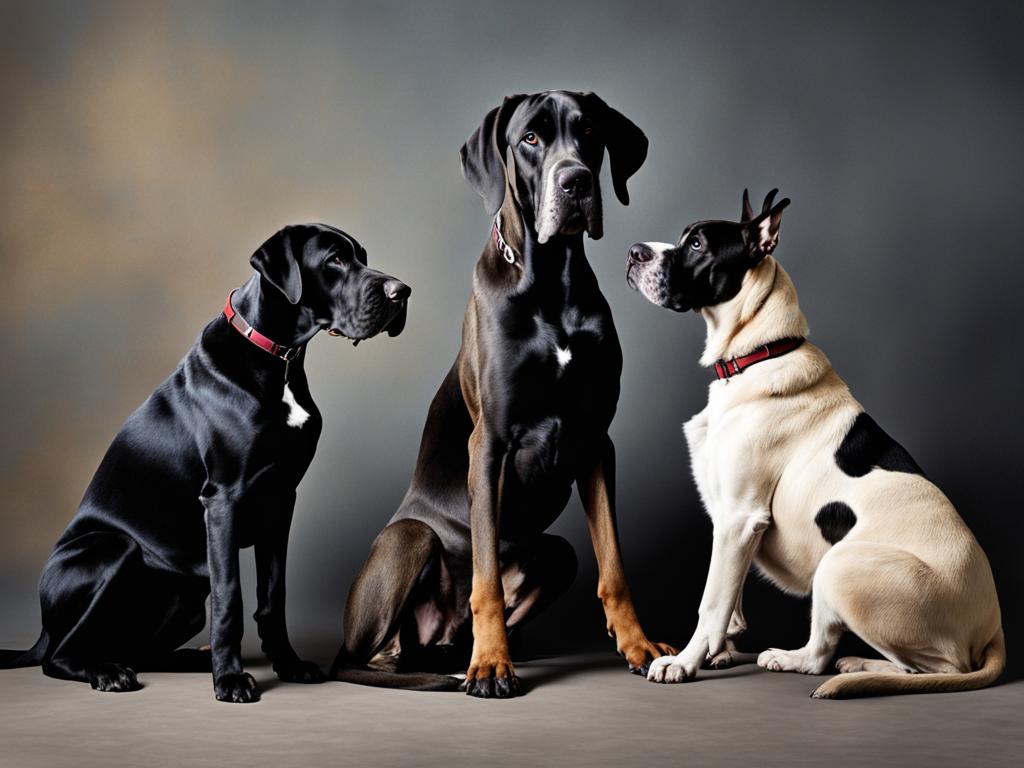
Think your pooch has what it takes to compete in the league of colossal canines? Well, tuck in those tails and stand back, because we’re about to unleash the true giants of the dog world. You might need a bigger couch as we dive into the domain of giant dog breeds, the impressive and awe-inspiring canine giants that trot with an air of grandeur and brawn.
These majestic mutts are more than just pets; they’re like furry family members that can pretty much carry your groceries in one go. So, if you’re curious about which breed boasts the title of the biggest dog breed, put on your detective hat because it’s time to sniff out the clues that lead to these admirable behemoths who turn heads at dog parks and might just be the perfect snuggle partners for those with a lot of spare room.
Key Takeaways
- Discern what defines a giant in the world of canine breeds.
- Understand that size isn’t the only impressive feature of these canine titans.
- Discover the roles these biggest dog breeds play in families and work environments.
- Prepare for the enhanced care and space requirements that come with owning a giant dog breed.
- Recognize the importance of these breeds and the profound bond they share with humans.
- Gain insight into the heartwarming and protective nature of these colossal companions.
Introducing the Titans of Canine World
Have you ever encountered a four-legged behemoth that caused you to look up in awe? Behold the titans of the canine world, the veritable dog breed giants that stroll majestically by your side. A stroll in the park with these dogs isn’t just a walk — it’s an expedition. With their staggering size, extra-large dog breeds such as the Great Dane, Mastiff, and Saint Bernard redefine the very concept of man’s best friend. Indeed, these giants are more than just pets; they’re the wardens of the household, embodying a balance of might and gentility.
When your pup tips the scales at well over 100 pounds, the key to harmonious cohabitation is understanding and preemptive navigation. Sure, they could easily squish your favorite pair of sneakers with a single paw — but isn’t there something utterly comforting about a guard dog that could double as a loveable armchair? Yet, don’t let that tranquil demeanor while snuggling on the couch fool you. These extra-large dog breeds are born from a lineage of hardworking protectors. They’ve been guardians and service dogs — their history is as grand as their stature.
Still, incorporating a mammalian titan into your abode comes with its quirks. You’ve got to have the space to match their grandiosity; a tiny apartment just won’t do for these wide-circle-tail-waggers. And while they may not mean to be the canine version of a bull in a china shop, sometimes their sheer mass can be…well, a little overwhelming.
- Ever wondered why the leash feels like a tug-of-war match? Firm, consistent training is a must to keep their wanderlust in check.
- Even the doggy door needs to be, let’s say, custom-sized.
- Lets not even speak of the mountains of food required to keep their bellies full.
Yet, the journey with these dog breed giants is filled with an inimitable sense of joy. Is it the way they envelop your entire body in a hug? Or perhaps the heartwarming way they tenderly play with a butterfly, paradoxical to their enormous paws? So, if you’re ready to share your life with one of these affectionate titans, embrace the adventure — for you’re not just getting a dog; you’re gaining a fiercely loyal friend who just happens to block the entire TV when they stand in the living room. Welcome to the delightful world of the titans of the canine world.
Discovering the Great Dane: A True Giant Among Dogs
Step into the world of the Great Dane, a breed that astoundingly stands as the tallest dog breed on record. With their commanding presence and noble stance, these regal canines are the epitome of canine majesty. Let’s take a moment to appreciate the impressive stature of these gentle giants.
The Towering Heights of Great Danes
Picture this: you’re looking up, and up, and yet up some more, until you meet the warm, gentle eyes of a Great Dane. Standing at a head-turning 28 to 32 inches at the shoulder for males, it’s no exaggeration to label them as the skyscrapers of the dog park. These dogs aren’t just tall; they’re the canine equivalent of a basketball star.
Zeus: The World’s Tallest Dog
Imagine sharing your home with a dog whose head towers over the dining table, and when standing on hind legs, peers down at you from over 7 feet tall. This was the reality for those who lived with Zeus, the World’s Tallest Dog as recognized by Guinness World Records. This Great Dane measured a remarkable 44 inches in height at the shoulder!
Health Considerations for Owning a Great Dane
Before you decide a Great Dane is the dog for you, it’s crucial to consider their health requirements. Likened to owning a small horse, these dogs can be prone to heart conditions. Their grandeur comes with a responsibility to provide them with care that’s as sizeable as their physique. Regular vet check-ups and a comfy space to rest their colossal frames are just the beginnings of what you’ll need to factor into your life.
Understanding the Majestic Mastiffs
Gaze upon the colossal and heartwarming world of Mastiff breeds, among the largest dog breeds known to humankind. These noble creatures stand as vigilant protectors of their human counterparts, merging strength with an enigmatic gentleness. Let’s dive – or should we say, lumber – into the details that mark the presence of these protective dogs in the homes and hearts of those who cherish them.
Mastiff Varieties and Their Unique Traits
If you’ve ever encountered a Mastiff, you’ve felt that mix of awe and perhaps a slight chill down your spine; it’s like meeting a living legend. The English Mastiff, Neapolitan Mastiff, and Bullmastiff each showcase distinctive features that set them apart within their formidable family. Have you ever seen such expressive eyes, so poised to ruminate on the human condition? It’s almost as though they understand you without a bark or a whimper.
Guardians with a Gentle Touch
Imagine a giant sentinel, steadfast at your gate, imbued with such innate courage that intruders wouldn’t dare trespass. Now picture the same giant, transforming into a tender-hearted member of your family, bringing a sense of serenity to your abode. Their vast bodies are outmatched only by their boundless loyalty. However, it’s crucial to instill socialization early on; their inherent protective instincts must be channeled with care and affection.
| Breed | Weight | Height at Shoulder | Role | Temperament |
|---|---|---|---|---|
| English Mastiff | 120-230 lbs | 27-30 inches | Companion, Guardian | Gentle, Loyal |
| Neapolitan Mastiff | 110-150 lbs | 24-31 inches | Guardian | Watchful, Dignified |
| Bullmastiff | 100-130 lbs | 24-27 inches | Protector | Brave, Affectionate |
In the end, you can’t help but admire these guardians with a gentle touch—a living paradox of might and mildness. The Mastiff breeds – there’s nothing quite like them, and they make you wonder how such grand creatures can meld so seamlessly into our lives, as though they were just another member of the family. A large, very large, member, that is.
The Gentle Giants: St. Bernard Dogs
Imagine a four-legged hero with a heart as expansive as its size, bounding through snow-laden slopes to rescue the weary traveler. You’ve pictured the St. Bernard, an emblem of courage wrapped in a fur coat. Renowned as rescue dogs, these furry saviors have leaped from Alpine legends right into the family yard, proving to be one of the most loyal dog breeds you could cozy up to.
Let’s talk stature: St. Bernards tower with an imposing presence. The males stand regally at 26 to 30 inches at the shoulder, and tip the scales at a snugly 120 to 180 pounds. Now, picture these measurements as puppies rapidly outgrowing every nook and cranny of your house—yes, their growth is both a wonder and a challenge to behold!
But it’s not just their size that captures hearts; it’s their gentle nature. St. Bernards are like the tender giants of canine companionship, always ready to offer a comforting nuzzle. They’re famously good with children, exhibiting patience and affection that earns them a star spot in family photos (and hearts).
| St. Bernard Traits | Details |
|---|---|
| Height (Shoulder) | 26 to 30 inches |
| Weight | 120 to 180 pounds |
| Temperament | Tender, friendly, family-oriented |
| Famous For | Mountain rescue efforts |
| Family Compatibility | Excellent with a capital ‘E’ |
So next time you’re watching “Beethoven’s 2nd” and chuckle at the shenanigans of a St. Bernard, remember: these canines carry with them a storied past of mountain rescue and have evolved to become endearing members of the family home. A St. Bernard may just teach you a thing or two about love, loyalty, and why the biggest dogs often have the biggest hearts.
Boerboel: The Protector of Homesteads
Meet the Boerboel: the imposing, loyal, and historically rich farm dog that has evolved from a dedicated protector of South African homesteads into a beloved, protective dog breed worldwide. These muscular guardians mesh brawn with a tender dedication to their families, striking a balance that any would-be intruder would be wise to respect.
Temperament and Compatibility with Families
If you’re picturing a dog that combines the watchful eye of a seasoned shepherd with the heart of a sprawling country estate, you’re visualizing the Boerboel. This breed’s temperament is as robust as their physique; steady and self-assured, they exude an aura of control and confidence. Owing to their composed nature, they form strong bonds with their humans, especially the little ones, making them a favored choice for a family protective dog breed. However, Boerboels do come with a caveat – they play nice with kids but can have their patience tested by other assertive dogs, meaning they need a firm, consistent hand when it comes to socialization.
Boerboel’s Role Throughout History
Originally bred to secure farms from prowling predators, Boerboels have a resume dating back to the 1600s, where they patrolled the South African homesteads. Their role has since shifted, but their innate desire to safeguard has not waned. Present-day Boerboels have channeled their historical vigil into becoming top-notch family guardians, their protective instincts perfectly etched into their DNA.
With just a glance at this formidable breed, it’s clear that they’re not your standard lapdog—unless you’re alright with having 200 pounds of loyalty on your lap. But worry not; despite their solid, almost lion-like stature, they carry an impressive agility that would make any farm dog proud. Intrigued about how the Boerboel sizes up against other dogs with a protective nature? Here’s a table that paints a clearer picture:
| Breed | Origin | Height (inches) | Weight (pounds) | Traditional Role | Family Compatibility |
|---|---|---|---|---|---|
| Boerboel | South Africa | 22-27 | 150-200 | Farm Guardian | High |
| Rottweiler | Germany | 22-27 | 85-130 | Herding/Livestock Protection | Moderate |
| Doberman Pinscher | Germany | 24-28 | 60-100 | Guard Dog | Moderate |
| Bullmastiff | United Kingdom | 24-27 | 100-130 | Estate Guardian | High |
Dogged determination and strength define the Boerboel, but what truly sets them apart is their soft spot for their family, making them a warm—if somewhat oversized—addition to any home that can match their energetic spirit. Looking for a dignified dog that mirrors the boldness and beauty of rural life yet carries an innate nobility fit for your household? Boerboel is the guardian breed you’ve been searching for.
Newfoundland: The ‘Nanny’ Dogs for Children
As you embark on the journey of discovering the quintessential family companion, make way for the Newfoundland dogs, or ‘Newfies,’ which are nothing short of furry lifeguards and babysitters rolled into one. Their reputation as a ‘nanny’ dog for children is not just a heartwarming anecdote but a testament to their guardian lineage and gentle temperament. So, bask in the warm embrace of a Newfie’s affection, but be prepared for the inevitable slobber— a small price for priceless loyalty.
Why Newfoundlands Are Ideal for Water Rescue
Let’s dive into what makes the Newfoundland breed an unmatched choice for water rescue. Their muscular build, combined with a webbed paws design, equips these gentle giants with the natural ability to maneuver through rough waters with ease. Imagine them as the canine equivalent of an elite swimmer clad in a wetsuit, as their thick double coats protect against chilly waters, and their sheer power propels them to save lives without a second thought.
Living with a Newfoundland: A Guide
Cohabiting with a Newfie isn’t just about offering a spacious spot by the fireplace. It’s about understanding their need for both physical and social fulfillment. Regular, albeit not overly strenuous, exercise coupled with interactive play keeps them psychologically well-tuned and physically in shape. And don’t forget to clear your schedule for grooming sessions to maintain their luscious coat, which is by no means a chore when followed by a Newfie snuggle.
| Feature | Benefits | Considerations |
|---|---|---|
| Sturdy Build | Strong swimmer, great for active families | Requires ample space at home |
| Gentle Temperament | Makes safe and affectionate playmates for children | Needs consistent, gentle training and socialization |
| Thick Double Coat | Ideal for cold climates and water rescue | Regular grooming needed to keep coat healthy |
| Life-Saving Instincts | Can perform water rescues and emergency aid | Need for ongoing training to hone rescue skills |
Have you got the space, the patience, and the heart for a Newfie? If you nodded ‘yes’, you are one step closer to welcoming a Newfoundland dog into your life—worry not, your children will have the most dependable four-legged guardian by their side.
Embracing the Leonberger’s Royalty and Agility
Imagine the grandeur of a dog that embodies the spirit of European nobility, with a heritage steeped in royal history. Now picture this magnificent beast playfully frolicking in your backyard, exhibiting the soul of a gentle companion dog. That’s the Leonberger for you—agile giant dogs whose royal bloodline now enhances the daily lives of families across the United States.
What makes the Leonberger stand out as one of the most versatile companion dogs around? Let’s dive into their world, where strength meets eloquence, and discover what it’s like to live alongside these noble creatures.
From Napoleon’s Court to Your Home
| Characteristic | Description |
|---|---|
| Height | 25.5 to 31.5 inches at the shoulder |
| Weight | Up to 170 pounds |
| Temperament | Sociable and willing to work |
| Exercise Needs | Daily activity to maintain agility |
| Grooming Requirements | Regular, due to dense double coat |
| Best Suited For | Active families looking for a loyal and affectionate companion |
| Historical Role | Royal companions, water rescue, herding |
As you consider making a Leonberger a part of your family, remember: you’re not just getting a pet; you’re adopting a slice of history. These companion dogs boast a lineage of agility and keen intelligence. They excel in modern canine sports and activities, perfect for owners who value both physical prowess and an endearing, friendly nature in their four-legged friends.
Embrace the majesty. Embrace the agility. When you bring a Leonberger into your heart and home, you’re welcoming a loving companion with a regal past, ready to carve out a joyful present with you.
The Versatile Anatolian Shepherd: Guardian and Companionship
When you think of Anatolian Shepherds, think of the ultimate farmhand that doubles as a babysitter for your goats. Standing tall with a commanding posture, these diligent livestock guardians originate from the rugged terrains of Turkey, but they’re just as ready to call your acreage home.
With their keen eyes and robust build, don’t be surprised if they’re less enthusiastic about fetch and more about surveying the land. Still, their protective instincts are second to none, making them one of the most dedicated protective dogs around.
Don’t let their serene stance fool you; beneath that tranquil exterior lies a world-class protector. You’ll find Anatolian Shepherds excel in watching over the flock, and with their surprisingly gentle nature, even the family cat gets a nod of approval.
Now, if you’re mulling over welcoming one of these multi-skilled pooches into your life, remember that this breed’s calm is matched by their desire for dominance. A bit of a paradox, but nothing that early training and consistency can’t iron out. As a testament to their steadfast loyalty, here’s a table comparing the Anatolian Shepherd to other popular livestock guardians.
| Breed | Height at Shoulder | Weight | Guardian Instinct | Family-Friendly |
|---|---|---|---|---|
| Anatolian Shepherd | 27-29 inches | 80-150 pounds | Exceptional | Yes, with training |
| Great Pyrenees | 25-32 inches | 85-160 pounds | Strong | Yes |
| Komondor | 25.5-27.5 inches | 80-100 pounds | High | Selective |
| Bernese Mountain Dog | 23-27.5 inches | 70-115 pounds | Moderate | Very friendly |
And there you have it, your stoic shepherd packed with a personality that’s as rich as their history. Whether it’s a peaceful countryside or the bustling family farm, these dogs are up for the task—watching, guarding, and charming their way into being the new favorite four-legged family member.
Greater Swiss Mountain Dog: A Valiant Working Breed
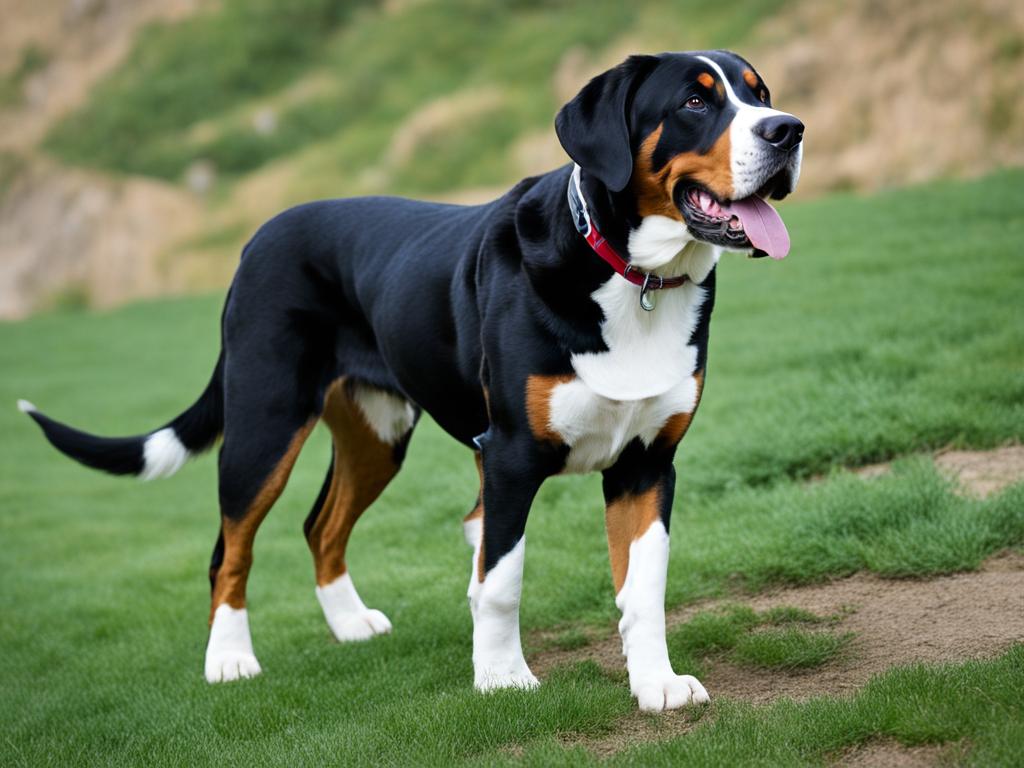
Picture this: A robust, multicolored coat and eyes that sparkle with a playful yet determined spirit. Yes, you’ve just envisioned a Greater Swiss Mountain Dog, the Swissie. As one of the hardy working breeds, their sturdy frame is a testament to their deep-seated history in the rugged Swiss Alps—a history interwoven with strength, agility, and an unwavering commitment to task. Let’s dig a little deeper into what makes a Swissie not just a pet, but a powerful and loyal member of the family.
The Swissie’s Strong Physique
Have you ever wondered what stands behind the sturdy stance of the Greater Swiss Mountain Dog? It’s all about their impressive physique, a marvel of canine engineering. With a height that can soar up to 28.5 inches at the shoulder and a weight that can bulk up to a solid 140 pounds, these dogs are nothing short of majestic. Covering their solid bones is a thick tri-color coat, capable of withstanding alpine chills and exuding an aura of resilience. But don’t let their build intimidate you; their sizable heart matches their stature pound for pound.
The Overlooked Multitaskers
Often overshadowed by more famous alpine breeds, Swissies are, in fact, the ultimate multitaskers. Their historical role of cart pullers has evolved magnificently into versatile family companions capable of various tasks. From offering sleigh rides to the little ones to joining you on a hiking adventure, they inject joy into every activity with their playful yet determined energy. Their ability to balance work and play, duty and devotion, is the epitome of multitasking mastery.
| Feature | Benefits | Fun Facts |
|---|---|---|
| Loyal Companionship | Bond strongly with family members, dependable | Known to form a special connection with children |
| Robust Build | Excellent at physically demanding tasks | Sometimes mistaken for a small bear due to their imposing appearance |
| Diverse Abilities | Cart pulling, herding, watchdog | Can learn various tasks and commands with relative ease |
| Highly Adaptable | Thrive in both cold and moderate climates | Despite their size, they are pretty agile and enjoy outdoor adventures |
Irish Wolfhound: An Icon of Speed and Growth
If you’re drawn to the grandeur of the Irish Wolfhound, know that you’re gazing upon the tallest dog breed that sprints through its puppyhood like a gentle giant on a racetrack. Indeed, these fast-growing puppies expand almost as quickly as your fascination with them, commanding presence as both historical hunters and present-day companions.
Irish Wolfhound’s Astonishing Puppyhood
Every day in the life of an Irish Wolfhound puppy could be a visible change—almost a pound heavier, sometimes seemingly taller as you sip your morning coffee. This breed’s growth is nothing short of a live-action scene from nature’s most remarkable phenomena. Let’s dig into what makes these puppies the epitome of canine development:
| Age | Height Increase | Weight Gain | Development Milestones |
|---|---|---|---|
| 0-3 Months | 2-4 inches per month | 10-12 pounds per month | Coordination begins to develop, socialization essential |
| 3-6 Months | 3-5 inches per month | 20-30 pounds per month | Teething and continued social interaction |
| 6-9 Months | 2-4 inches per month | Gradual slowdown in weight gain | Training for basic commands, growth slows down |
| 9-12 Months | Reaches adult height | Approaches adult weight | Refinement of temperament, gaining muscular physique |
The stature isn’t just for show; the Irish Wolfhound was historically bred for its speed to be fierce hunters. Today, while you might not need to hunt elk or defend against wolves, these swift and agile canines offer companionship in a grand scale—fit for those who appreciate a noble heart wrapped in a tapestry of fur and speed.
What Is the Biggest Dog Breed?
Ever find yourself comparing the colossal canines that roam the dog parks and wonder who would win the title of the heavyweight champion in the dog world? Well, it’s not just a simple tape measure around the chest or a quick glance at the scales that can give you the answer. Let’s embark on a journey through breed standards and historical canine records to crown the king of size in the canine kingdom.
Exploring Breed Standards and Records
When you’re looking at the biggest dog breed standards, you’ll notice that breeds like the Great Dane, English Mastiff, and Saint Bernard stagger the imagination with their impressive dimensions. Canine records, on the other hand, often hail individual dogs that have grown to exceptional sizes, like Zeus, the Great Dane who became a Guinness World Record holder. Yet, it’s the breed standards set by kennel clubs that offer the most consistent metrics for comparison.
Comparing the Contenders
Awarding the title of “Biggest Dog Breed” requires a dog breed comparison that is fair and square. You’ll need to look at both ends of the spectrum – from the towering height of the Great Dane to the sheer mass of an English Mastiff. The Irish Wolfhound also trots into this category with its towering stature. Let’s lay out the stats in an easy comparison:
| Breed | Average Height (inches) | Average Weight (pounds) | Distinctive Trait |
|---|---|---|---|
| Great Dane | 28-32 | 110-175 | Record-breaking height |
| English Mastiff | 27-33 | Up to 230 | Astonishing weight |
| Irish Wolfhound | 30-35 | 105-180 | Tallest sighthound |
In your quest for canine superlatives, you’ll discover that each of these breeds has been crafted by history and selective breeding to play specific roles, which contribute to their legendary proportions. So next time you see one of these gentle behemoths, you’ll appreciate not just their titanic size but the remarkable history that walks alongside them.
Akita and Bullmastiff: More Than Just Size
When you gaze upon the Akita and Bullmastiff, you witness not mere pets but storied guardians whose imposing frames are eclipsed only by their deep cultural reverence and amiable dispositions. Let’s delve into the ethos of the Akita breed and why Bullmastiff guard dogs stand as exemplars of gentleness amidst might.
Cultural Significance and Personality of Akita
Embodied within every Akita is the heart of Japan’s national heritage—spirited, poised, and symbolizing wellness and prosperity. This breed’s dignified stance, ranging between 24 and 28 inches, is matched by its fastidious grooming habits resulting in a coat as pristine as its storied lineage. Whether quietly watching over a family or serving as a noble counterpart to hunters on rugged terrains, the Akita remains an enduring emblem of dog cultural significance.
Bullmastiff’s Balancing Act Between Strength and Affection
Within the Bullmastiff resides a fascinating dualism: the tenacity of a stalwart guardian melded flawlessly with an affective, compliant spirit. Forged from the loins of mastiffs and bulldogs, these undaunted companions exemplify containment, wielding their substantial 100 to 130-pound frame with astounding discretion. In the presence of loved ones, the fierce exterior nurtured for protection dissolves into a serene docility, marking the Bullmastiff guard dogs as paramount examples of gentle giants.
Together, the Akita and Bullmastiff share the stage as monumental breeds where the delicacy of their temperament shines as brightly as their legendary physiques—a testament, indeed, to the versatile tapestry of our canine companions’ world.
Unleashing the Conclusion: Embracing the Journey with Giant Dog Breeds
As you stand at the precipice of this grand canine adventure, you’ve captured a panoramic view of the canine colossi that roam the world of giant dog breeds. From the sky-scraping Great Dane to the muscled splendor of the Mastiffs and the noble St. Bernard, these breeds are much more than a sum of their parts. Your journey through the narratives of these canine giants leaves you with a roadmap to understanding their storied past, their indelible imprint on human lives, and their profound companionship.
Living with large dogs isn’t a walk in the park—it’s a trek through the heart of their boundless spirit. It’s a commitment carved in dedication to adopting giant dog breeds, braving the challenges, and reaping the bountiful love they dispense. As your heart sets to welcome a colossal companion into your life, remember that it’s a storied bond that grows deeper with understanding and responsibility. You step into a role shaped by centuries, ensuring that every wag of their mighty tails chronicles a yet another chapter in their historical legacy.
Whether you’re on the cusp of adopting or are a seasoned caretaker crafting a haven for these gentle behemoths, your life unfurls into a tapestry rich with slobbery kisses and powerful paws that leave imprints not only in your yard but in your soul. So, gear up to embrace the magnitude of adopting a giant dog breed, for you’re about to etch your days with stories, to scale mountains of joy, and to embark on an odyssey where every heartbeat harmonizes with the resounding thuds of paws that champion a love larger than life itself.
FAQ
What qualifies a dog breed as a ‘giant’?
Typically, a ‘giant’ is any dog breed that exceeds 100 pounds, with profound size and height that often aligns with the working group category, including roles such as guardians or protectors.
Who was Zeus and why is he significant in the realm of giant dog breeds?
Zeus was a Great Dane who held the title of the World’s Tallest Dog by Guinness World Records in 2012, standing 44 inches at the shoulder and stretching over 7 feet tall on his hind legs.
Are giant dog breeds like the Mastiff suitable for families?
Yes, despite their formidable appearance and innate guarding instincts, Mastiff breeds often have gentle temperaments and thrive when integrated into the family environment. However, they do require early socialization to fine-tune their protective nature.
Can St. Bernard dogs actually perform rescues?
St. Bernards have a storied history as rescue dogs, particularly in the Swiss Alps, where they were used to locate and help stranded or injured travelers in snowy and dangerous terrains.
What kinds of families are best suited for owning a Boerboel?
The Boerboel is best suited for families that can provide a structured environment that channels the breed’s protective instincts while also fostering its soft spot for affection, particularly with children.
Are Newfoundland dogs appropriate for households with young children?
Absolutely! Newfoundlands are known as ‘nanny’ dogs for their protective and gentle nature around children, making them excellent family pets.
Why are Leonbergers considered good companion dogs?
Leonbergers are renowned for their adaptable and sociable temperament, majestic presence, and agility, making them fitting companions in homes where their need for regular exercise and engagement can be met.
What is the role of an Anatolian Shepherd Dog in a home setting?
Given their protective and calm nature, Anatolian Shepherds make excellent guardians for their human families and even get along well with family pets, including cats, when properly introduced and socialized.
How can Greater Swiss Mountain Dogs contribute to modern family life?
Greater Swiss Mountain Dogs bring joy and camaraderie to family settings with their devotion and playful nature. They are versatile and can engage in multiple activities, such as pulling children in sleds or participating in family chores.
What are some unique aspects of Irish Wolfhound puppies?
Irish Wolfhound puppies experience rapid growth, often gaining around a pound per day until about six months old, making their puppyhood a time of dramatic change and development.
When it comes to the biggest dog breed, how do mass and height play into the determination?
The debate over the biggest dog breed often hinges on whether height or mass is the determining factor. Great Danes are known for their height, while English Mastiffs and Saint Bernards claim recognition for their considerable mass.
What is the significance of the Akita breed in its native country?
In Japan, the Akita breed is deeply revered and symbolizes health, happiness, and longevity. The Akita also expresses a deep spiritual connection in its native culture.
How does the Bullmastiff exemplify a balance between power and gentleness?
Although originally bred for guarding purposes, the Bullmastiff is known for its non-aggressive demeanor and the tranquil assurance it brings to a family setting, despite its powerful physique.
What are the considerations for adopting or buying a giant dog breed?
Adopting or buying a giant dog breed entails embracing their sizable requirements for space, care, and love. Prospective owners must consider the breed’s exercise needs, potential health issues, and life expectancy, ensuring they can provide a suitable environment for these gentle behemoths.