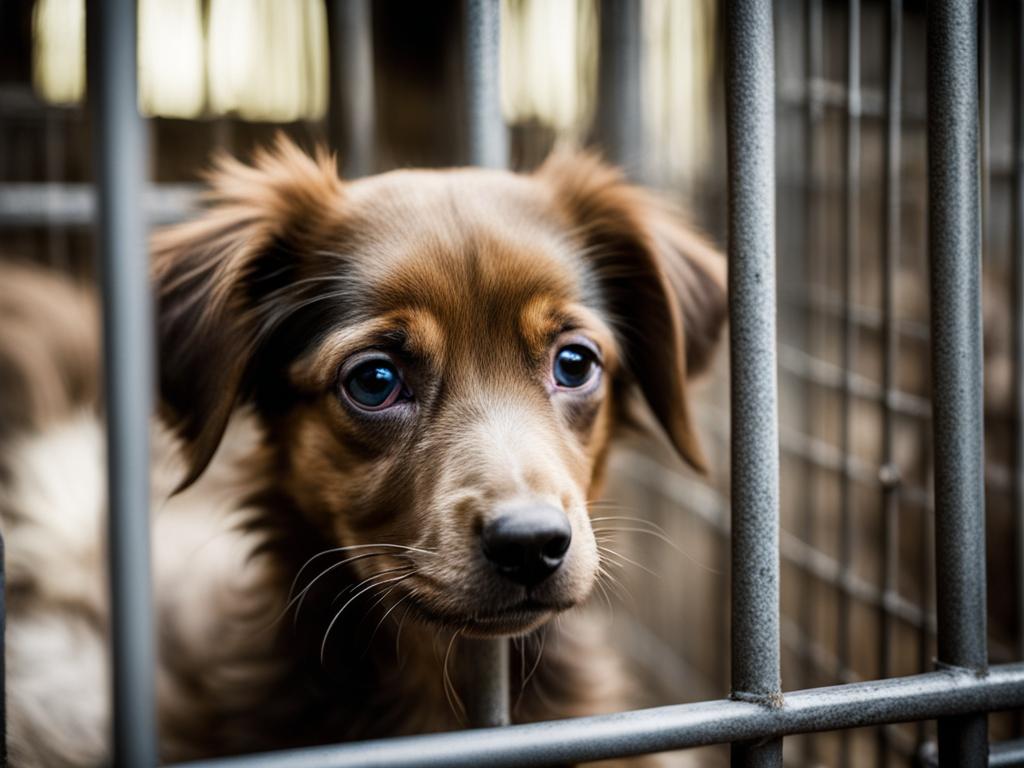
Ever stumble upon the term ‘puppy mill’ and feel a shiver crawl up your spine? You should, because underneath that innocuous-sounding moniker lurks an unsettling reality of the pet industry. A puppy mill, in its stark, unembellished puppy mill definition, is not a quaint little farm spilling over with frolicking furry friends, as one might hope. It’s the dark underbelly of commercial dog breeding, a place where the inhumane treatment of our canine companions is not an unfortunate incident but a business model.
Imagine rows upon rows of innocent eyes, peering out from behind bars, where the stench of animal cruelty is masked by the false cheer of brightly colored advertisements. These factories of sorrow put profit margins before the soft whimpers of man’s best friend, churning out puppies with efficiency that would make an assembly line pale. It’s an industry where affection has a price tag, and that tag often comes at the cost of an animal’s well-being.
Key Takeaways
- Understand that puppy mills are a grim facet of commercial dog breeding focused on quantity over quality of life.
- Recognize inhumane treatment as a standard in these mills, where dogs are commodities rather than companions.
- Identify animal cruelty, not as an exception, but as a pillar of the puppy mill industry.
- Empower yourself with knowledge to take a stand against these unethical breeding practices.
- Grasp the importance of raising public awareness to drive demand away from such operations.
Defining the Undeniable: What Constitutes a Puppy Mill?
Let’s peel back the layers and peer into the grim world of puppy mills, shall we? You’ve probably heard the chilling tales, but what sweeps the entire issue into dire straits are the very definitions that make a puppy mill.
Exploring the Inhumane Conditions of Commercial Dog Breeding
Imagine, if you will, rows upon rows of confined cages, each a so-called home to a dog whose sole purpose has been reduced to breeding. Here, the term dog breeding cruelty finds its full, harrowing expression. Care, affection, and basic comforts are commodities these dogs are denied, replaced by the bare legal minimum—a sprinkle of food, a slosh of water, and a shield, albeit flimsy, against the elements.
Operating Within the Law: The Legality of Puppy Mills
Now, tread carefully, for here’s the catch: the grim reality you’ve just imagined is, astoundingly, often completely legal. Thanks to startlingly minimal animal welfare laws, puppy mills exist snugly within the grey areas of puppy mill legality, dodging more severe repercussions under the guise of following the law.
The Cold Calculus: Profit over Welfare
Dive into the financial abyss of puppy mills, and you’ll uncover a stark reality: profits are king, with welfare not even a pawn in this ruthless game. It’s an arena where unethical breeding practices go hand-in-hand with cold hard cash. With earnings soaring into the sky-high realm of hundreds of millions, if not billions, annually, the insidious cycle persists, fueled by a relentless quest for profit at the tragic expense of animal welfare.
Yet, amidst this dark tableau, lies your power as an advocate, a consumer, a voice. Understanding the mechanics of puppy mills is a pivotal step towards extinguishing their existence. So grasp this knowledge, feel the weight of its significance, and prepare to rally for change.
Behind The Curtain: HSUS’s Role in Fighting Puppy Mills
When you consider the fight against the inhumane conditions of puppy mills, one stalwart champion stands out: the Humane Society of the United States (HSUS). This organization has been on the front lines, working tirelessly through legislative efforts and consumer education to dismantle this cruel industry.
Legislative Advocacy and Making Legal Changes
HSUS doesn’t just wag its tail in dismay; it bites into the legal frameworks that allow puppy mills to exist. They push for laws that tighten the leash on commercial dog breeding operations. You’ve got to admire the bite in their bark as they call on lawmakers to craft better legislation.
Investigations and Public Awareness Campaigns
The HSUS isn’t afraid to get their paws dirty. Their undercover investigations expose the gritty reality of puppy mills, sending a clarion call to action for animal lovers everywhere. They’ve made a marked pawprint on public opinion, encouraging prospective pet owners to adopt rather than shop, bringing real tales (and tails) to the spotlight.
| HSUS Achievement | Impact |
|---|---|
| New laws influenced | 35 states |
| Dogs rescued | Over 11,000 |
| Abusive mills closed | Countless |
| Pet stores ceasing to sell puppies from mills | Many |
Through the Stop Puppy Mills campaign, HSUS not only leads these dogs to better lives but also teaches us the importance of being informed, responsible consumers. As bystanders turn into guardians, we align our consumer power with our values, turning the market away from cruelty and towards compassion. So, if you’re thinking of adding a furry member to your family, let’s put our best paws forward and adopt and advocate!
Legal Boundaries and Inadequate Laws
When you think about the Animal Welfare Act, it might evoke an image of strong safeguards for our furry friends in breeding facilities. But here’s the twist: while the AWA was a landmark step in 1966, fast forward to today, and it’s like trying to enforce modern traffic laws with a horse and buggy. There’s a whole interstate of USDA regulations, breeding facility compliance checks, and enforcement issues that need navigation — an odyssey of rules with loopholes wide enough to run a puppy mill through.
The Animal Welfare Act of 1966: A Closer Look
Let’s dive into the AWA, with its noble goal to ensure that animals bred for commercial sale are given a decent standard of living. While it set the stage for regulating breeders, the act is more of a guideline than a guardian. Enforcement difficulties arise from the USDA’s stretched resources and regulatory loopholes, making it a herculean task to ensure the act’s authority isn’t just a paper tiger.
Regulatory Shortcomings and Loopholes in Enforcement
Let’s get down to the nitty-gritty — the USDA is the watchdog supposed to bark and bite when breeders step out of line. However, deceptive breeders often slip through the cracks, selling directly to unsuspecting animal lovers like you, bypassing the need for a USDA license entirely. Plus, even with a license, repeat offenders can game the system, continuing their dubious operations, while pen pushers are drowned in the deluge of compliance paperwork.
| USDA Compliance Requirement | Challenges to Enforcement |
|---|---|
| Annual Inspections | Lack of inspectors and resources |
| Proper Animal Housing & Veterinary Care | Vague standards and inconsistent interpretation |
| Licensing for Commercial Breeders | Direct-to-consumer sales loophole avoids licensing |
| Minimum Care Standards | Standards not comprehensive for ensuring animal welfare |
It’s one thing to have rules; it’s another to make them stick. And with these enforcement issues, it’s like herding cats. There’s a groundswell of support for tightening these regulations, but without a significant revamp of how the USDA operates, the quest for a humane environment in breeding facilities remains a distant dream.
Animal advocates and organizations are barking up the right tree, lobbying for stronger laws to bridge the enforcement gaps we see today. But, my dear reader, as long as the system is stuck playing catch-up, the responsibility ultimately falls to you to be vigilant against complicity in this baffling circus of animal welfare neglect.
Unseen Cruelties: The True Cost of Puppy Mills
Imagine, for a moment, you’re trapped in a world bereft of comfort, love, or even the most basic care. This is the daily horror for canines caught in the relentless gears of puppy mill suffering. These shadowy institutions churn out puppies at an alarming rate, utterly dismissive of the animal neglect in their wake. It’s not just the squalid conditions that scratch at your conscience, it’s the myriad of behavioral problems relentlessly brewing beneath the surface like a tempest, waiting to unleash upon unsuspecting consumers.
But let’s get tangible–after all, the numbers don’t lie, and neither do the heartrending gazes of the countless dogs who’ve endured these puppy production lines. It is incumbent upon you, the consumers, to pull back the curtain on these undetected atrocities. Consumer awareness is the lynchpin in this struggle; it’s the potent tool that transforms apathy into action, ignorance into insight.
| Aspect of Neglect | Consequences for Dogs | Impact on New Owners |
|---|---|---|
| Lack of Sanitary Conditions | Increased risk of disease and infection | Unexpected veterinary costs and emotional distress |
| Overbreeding Practices | Exhausted and debilitated maternal health | Genetic disorders and temperament issues in puppies |
| Inadequate Veterinary Care | Untreated illnesses and unchecked pain | Responsibility for chronic health conditions |
| Insufficient Socialization | Development of fears and phobias | Behavioral challenges and possible aggression |
| Limited Exercise and Stimulation | Mental atrophy and physical debility | Strain of managing a lethargic or hyperactive pet |
“But what can I do?” you might muse. For starters, decide to heed the call of the silent whimpers that reverberate through this industry; your choice at the cash register or adoption center contributes to a force that can either perpetuate or obliterate this cycle of maltreatment. Use your voice, your platform, your social savvy to educate, to advocate, and to make the vow that our furry companions will no longer be silent statistics in the ledger books of the unscrupulous. Let’s gallantly stride towards a future muzzling the cruel clatter of the mills and unfurl a world resplendent with respect and dignity for man’s best friend.
The Power of Change: What You Can Do About Puppy Mills
Fact: You are the superhero dogs have been waiting for. No cape required, just the courage to take a stand against puppy mills and champion responsible pet ownership. Yes, you!
You can be the kryptonite to these villainous puppy mills. How, you ask? It’s all about making choices that weaken the puppy trade and embolden advocates and pets alike. We need a pack, and you’re invited to be part of the change!
Reporting Abuse: Steps to Notify the Authorities
If you witness the unspeakable, say something! Reporting animal abuse is not just brave, it’s a civic duty. Here’s your how-to:
- Document everything. Photos, videos, detailed notes—gather them like a squirrel prepping for winter.
- Contact local authorities. Whether it’s your local animal shelter, humane society, or the police – dial that number.
- Be persistent. Follow-ups are your new best friend. Keep the pressure on until action is taken.
Combating puppy mills starts with vigilant citizens like you making the call.
Choosing Adoption Over Purchase: Why It Matters
You’ve seen it, the mantra of the conscientious pet lover: “Adopt, don’t shop.” It’s not just a catchy phrase; it’s the very key to throttling the puppy mill pipeline.
- Check out local shelters. They’re full to the brim with dogs who may have had a ruff start, but have tons of love to give.
- Research rescue groups. These wonderful organizations often rescue dogs directly from puppy mills and will give you the lowdown on responsible pet ownership.
Each time you adopt, you’re not just giving a loving home to a deserving dog—you’re also drying up the funds for puppy mills one adorable pup at a time.
Remember, every dog has its day, and your choices can ensure that happy days aren’t just here again—they’re here to stay. Let’s make every tail wag count in the fight against puppy mills!
The Buyer’s Plight: Understanding the Risks of Purchasing a Puppy Mill Dog
So you’re tempted by the endearing eyes of a puppy in a pet store window—stop right there! Before you succumb to a spur-of-the-moment dog adoption, you should be aware of the potential heartache (and drain on your wallet) that often accompanies puppies from puppy mills. Let’s shed some light on the sobering truths and consumer risks associated with these unhealthy puppies.
Short-Term Endearment, Long-Term Heartache
In the beginning, a puppy’s love is unconditional and pure, but if that puppy comes from a puppy mill, the love story might not have a happy ending. Too often, these puppies struggle with significant health issues due to poor breeding conditions and lack of early veterinary care. Be wary—you could be signing up for a flurry of veterinary expenses that can barrage you faster than a puppy chasing its tail.
Financial and Emotional Costs of Puppy Mill Puppies
Imagine the strain, not just on your heartstrings, but also on your purse strings when faced with chronic health problems in a dog that should have been a healthy, frolicsome companion. Yes, there are pet lemon laws that may provide some financial reprieve, but let’s face it, these laws are more like a small bandage on a big wound. It comes down to gathering evidence like a seasoned detective and grappling with the emotional costs of caring for unhealthy puppies.
Empower yourself with information and take the proactive route. Put your hard-earned money towards supporting ethical breeding practices or even better, give a home to a rescue dog. Your wallet—and your new furry friend—will thank you for it.
- Investigate the source of your potential pet carefully.
- Consider adoption as a responsible alternative.
- Support legislation to tighten the reins on puppy mills.
In the nuanced world of pet adoption, your choices could support an industry fraught with animal cruelty or help dismantle it. Opt for the latter, and sleep well knowing you’re not contributing to a system that treats sentient creatures as merchandise. After all, love shouldn’t come with a hidden cost or a compromised conscience.
The Profit Obsession: Economics of Puppy Mills
Ever wonder how the puppy mill industry thrives? It’s a tale as old as time: profit maximization. Imagine, if you will, a factory churning out product after product; now replace those products with puppies. Yes, your fuzzy, four-legged friends are often products of an industry that’s less about cute wet nose bonks and more about the sound of cash registers.
Commercial breeding profits soar when the cost of ‘production’ dips. It’s the harsh reality where caretaking standards are skimped on to fatten profit margins. Sure, the innocent creatures pay the price, but so does the unwitting consumer, as the demand encourages more mills to pop up like fast food chains.
Let’s talk about the pet store supply chain, shall we? At first pass, pet stores seem like scenes from a child’s storybook—adorable animals gazing through the glass, waiting for a home. The backstory, however, isn’t quite as quaint. These stores are often the final link in the chain that stretches directly back to puppy mills, forming a cozy partnership fueled by charm and consumer ignorance.
Now, here’s a curveball for you—your buying choices are good as gold for these commercial breeders. The consumer demand impact is real and palpable. Every wallet opened, every purchase made, sends a clear message: “Keep the mills running!” It’s supply and demand with a side of furry heartbreak.
- Think twice before you buy; adoption is nearly always an option.
- Awareness can dismantle profitability; spread the word, not your cash.
- Become the kryptonite to this industry by supporting laws that put pets before profits.
They say money makes the world go round, but in the cycle of the puppy mill industry, it’s the ethical considerations that should bring us to a screeching halt.
So, the next time you’re tempted by a pet store’s siren call, remember: there’s a beast of an industry behind it, and it feeds on indifference. Make no bones about it; it’s your move.
The Agonizing Reality: Animal Welfare in Puppy Mills
Imagine, for a moment, that you’re confined in a space so small it barely accommodates your body. Now imagine living your whole life in that space, unable to stretch, exercise, or explore. Shockingly, this is not an excerpt from a dystopian novel; it’s a day-to-day scene in the world of cruel breeding practices in puppy mills. For countless dogs, the lack of care and inhumane conditions are not just a storyline; it’s their agonizing reality.
Life in a Cage: The Physical and Psychological Toll
In puppy mills, the quest for profit leaves no room for compassion, resulting in grave puppy mill consequences. Dogs spend their lives in cramped cages, with the bare minimum provided to keep them alive and fertile. They suffer from numerous untreated health issues, ranging from infections to severe dental decay. And let’s not forget the psychological scars—these animals are denied the love, playtime, and social interactions they inherently crave and require for well-being.
Breaking the Cycle: The Effect of Awareness and Actions
But there’s a silver lining, thanks to tireless advocacy efforts and an upswing in pet welfare reform, spearheaded by those who refuse to turn a blind eye. When you, yes you, choose to educate yourself and others about the plight of these animals, you become part of the solution. The power of collective action can incite change—adopting rather than shopping, supporting animal rights legislation, and challenging the status quo. Remember, every decision you make sends a message to the industry about the world you want to live in—one where every creature is treated with care and respect.
So, how about it? Will you be the voice they don’t have? It’s time to take a stand against the cruelty and write a happier narrative for our furry friends, one that doesn’t end with a period but an exclamation of change!
What is a Puppy Mill?
Let’s delve into the unsavory world of puppy mills, where the business motto is quantity over quality and profit eclipses compassion. These are not the idyllic farms you might be picturing; they’re more akin to doggy production lines, where puppies are churned out faster than the latest smartphone.
Imagine a place where man’s best friend is reduced to a revenue stream. Here, dogs are often deprived of basic needs, love, and medical care. It’s a realm where the term ‘puppy care’ loses its meaning entirely, replaced by a stark cost-benefit analysis that never benefits the pooches.
What defines a puppy mill? It’s a large-scale commercial dog-breeding facility where profit is given priority over the well-being of the dogs.
You might think such horrors belong to a bygone era, but sadly, these mills are as 21st century as it gets – an industry shadowed by the reality of animal neglect and suffering. If you’re considering adding a furry member to your family, it pays to be a conscious consumer. Scrutinizing the origin of your potential pet prevents indirectly endorsing these grim animal factories.
- Substandard living conditions? Check.
- Inadequate veterinary care? Double-check.
- Utter disregard for genetic quality? Unfortunately, that’s a check, too.
All of these are hallmarks of a puppy mill. In essence, if a breeding operation puts profit above the well-being of its dogs, you’ve likely pinpointed a puppy mill. So next time you see a too-good-to-be-true advertisement for puppies, remember the cost it truly bears.
Now, you’ve got 11 powerful keywords at your fingertips to help spread awareness. Use them like a digital megaphone to shout about the *real* conditions in puppy mills. You won’t just be educating – you’ll be part of the movement striving for change and betterment for our furry friends, one share at a time.
Conclusion
As we draw the curtain on the grim theater of puppy mills, your role in the ensemble for ethical pet ownership cannot be understated. Every day, the storyline of countless canines hangs by a thread, a narrative you have the power to rewrite. So, let’s talk about you—yes, you—the protagonist in this tale who stands at a crossroads. The choice you make can end a cycle of neglect, or perpetuate a market built on the commodification of man’s best friend.
Making it Personal: The Call to Ethical Pet Ownership
In the realm of responsible pet adoption, you are the unsung hero who can turn the page to a kinder narrative. By selecting a loyal companion from an animal shelter or a reputable breeder, you dodge the snare that puppy mills lay out for unsuspecting buyers. Imagine a world where the love of a pet doesn’t commence with the suffering of another. Opting for puppy mill alternatives isn’t merely a compassionate choice; it’s a declaration that the welfare of our four-legged pals is non-negotiable.
Together, We Can Write a New Chapter
And when you stand alongside others to champion animal rights advocacy, the ripple effect of your choices becomes a wave that can reshape the landscape. The plot we’re crafting is one of awareness and action, where responsibility is not only about providing a loving home, but also about educating and influencing communities and lawmakers. So, join the mission that forges a future where every dog is valued beyond price tags, and the chapters of abuse become obsolete, archived away in the annals of a compassionate society.
FAQ
What’s the raw deal with a puppy mill?
A puppy mill is a grim commercial dog breeding facility where the dollar rules, and the dogs drool—not out of happiness, but from neglect and inhumane treatment. Think less ‘bark park’ and more ‘shark tank’ for pups.
So, what makes a place a puppy mill and not just an enthusiastic breeder’s home?
If you imagine a doggy dystopia where animals are crammed into cages, devoid of belly rubs and cuddles, with their health on the backburner, you’re picturing a puppy mill. It’s not just unethical breeding practices; it’s a full-on affront to animal welfare.
Are puppy mills even legal?
Frustratingly, yes. They often skate by on the thin ice of minimal animal welfare laws, turning a blind eye to the wellbeing of the doggos in favor of doing the bank account tango.
Just how much green are we talking with these puppy mill profiteers?
Think monopoly money, except it’s real, and it’s splurging out of puppy mills. We’re talking an industry with profitability soaring into the stratosphere—somewhere between Scrooge McDuck and Jeff Bezos territory.
What’s the Humane Society of the United States (HSUS) doing to fight back against puppy mills?
HSUS is serving up a hefty dose of justice against puppy mills through legislative changes, exposing the dirty deeds through undercover ops, and educating you, the lovely public, on this tail of woe. They’re like the caped crusaders for canines.
Is there a law that sets standards for these commercial breeders?
Ah, the Animal Welfare Act of 1966—it’s supposed to be the rulebook for breeders. It sets some ground rules, but let’s just say there’s plenty of room for “interpretation” (and by interpretation, I mean shirking responsibility).
Describe the plight of the pups in these mills. It can’t be all that bad, right?
Oh, it’s as bad as a blind date gone wrong. The puppy mill signature cocktail includes a heavy pour of animal neglect, a splash of behavioral issues, and a garnish of psychological trauma. Drink, anyone?
I’ve got my detective hat on: How do I report these baddies?
Got evidence of Cruella de Vil’s dastardly deeds? Report the abuse to your local heroes—humane societies, animal control agencies, or even the fuzz. Your testimony could be the smoking gun.
Why should I adopt Fido from a shelter instead of buying him from a ‘breeder’?
Take the red pill and enter the real world: adopting your pooch from a shelter or rescue means you’re part of the solution, not the demand driving this inhumane enterprise. Plus, shelter dogs have the best ‘rags to riches’ stories.
Tell me the real cost of falling for that puppy-dog face from a mill?
Oh, the price of that furry face can spiral from “aww” to “ouch” real quick. Think steep vet bills, heartbreaking health woes, and the potential for bidding your new buddy adieu far too soon. It’s not just your wallet that suffers—it’s your heart, too.
How are these mills hitting the jackpot? Explain the economics to me.
Get this—puppy mills are cranking out pups like they’ve got a license to print money. By snipping care costs, they reap huge profits, and with the constant churn of litters, they keep the cash registers ringing. It’s an endless cycle of woof and dough.
What’s life like for a dog stuck in a puppy mill?
Imagine living your life in a shoebox, minus the comfort of shoes. We’re talking tight quarters, dirty floors, and a cycle of boredom and sadness. It’s no way for any living creature to exist.
Besides crying into my pillow, what can I actually do to help?
Dry those tears and wield your power! Your choices count: adopt, don’t shop. Spread the woof—I mean word. And pepper your legislators with letters demanding they give a yip about puppy welfare. Every little act adds up to big changes for these pups.
Aren’t there any laws to protect the innocent victims of puppy mills?
You bet your lint roller there are! ‘Puppy lemon laws’ are there to give you some bark for your buck if you accidentally buy from these mills. Compile all the evidence like a true pet detective to support your case.
Should I ever buy from a puppy mill if I want a specific breed?
In the eloquent words of every pop hit ever: just say no. Instead, research rescue groups that specialize in your dream breed, or team up with a vetted, ethical breeder who treats their dogs like family, not merchandise.